










science

Plankton Perfect: Using Imagery to Document Microscopic Marine Life

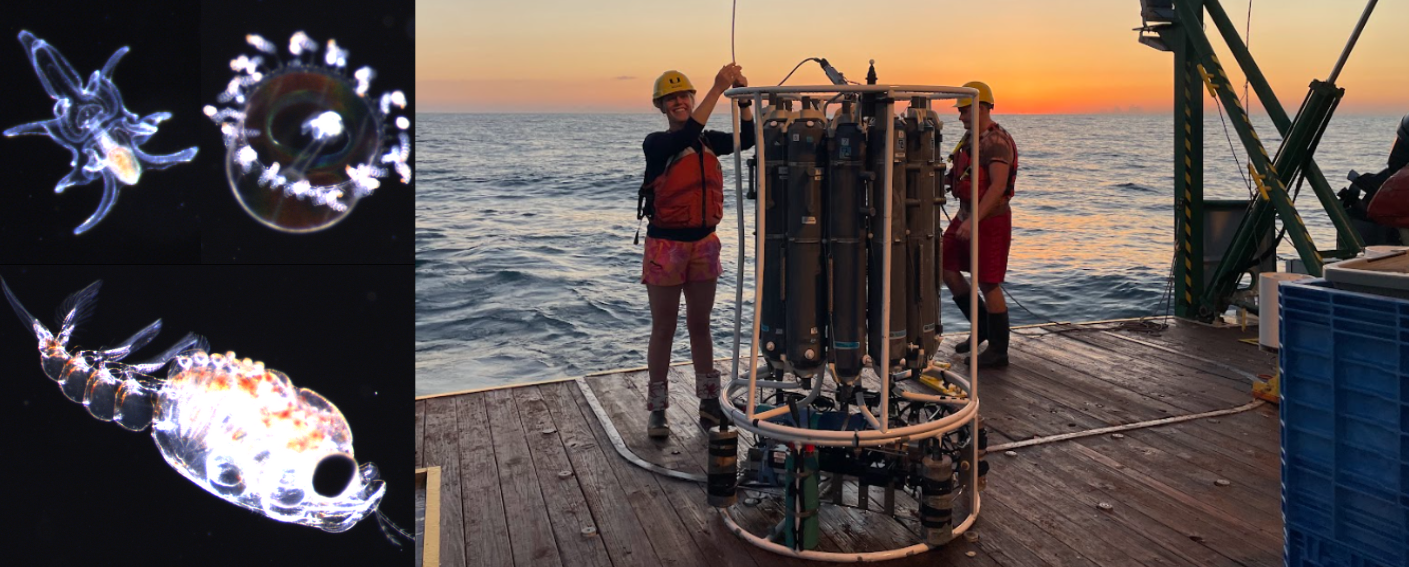
Pictured: Students operate a Conductivity, Temperature, and Depth (CTD) Rosette with an underwater microscope attached to capture photos of plankton. Far left top: starfish larva, left top: jellyfish larva, bottom left: crab, shrimp, or lobster larva. Dr. Enrique Montes is working to understand how plankton respond to changes in the ocean by capturing high resolution imagery with advanced technology. This work is funded by the Marine Biodiversity Observation Network (MBON) to use novel techniques like the Continuous Particle Imaging and Classification System (CPICS).

Continue reading

Advances in Molecular eDNA Techniques to Evaluate Taxa Diversity

Central to the US MBON is the development of new and innovative means to assess marine biodiversity. The MBON community has made significant advances in molecular eDNA techniques to evaluate taxa diversity – from microbes to whales – in highly contrasting ecosystems such as the Florida Keys and Monterey Bay in California. The team is examining the effectiveness of eDNA in the detection of change in biodiversity over time across Sanctuaries and other areas (e.

Continue reading

MBON and AOML Characterize Seascapes Biogeographic Regions to Understand Phytoplankton Assemblages in the Florida Keys National Marine Sanctuary

MBON, with NOAA/AOML, has characterized seascapes for the Florida Keys National Marine Sanctuary (FKNMS) and southwest Florida shelf nearshore environment using multivariate satellite and in situ measurements (MBON/CoastWatch Seascapes products: The effort illustrates best practices developed by MBON in collaboration with the South Florida Ecosystem Restoration Research (SFER) project and NOAA/AOML. The work is described in a July 15 paper in Frontiers of Marine Science.

Continue reading