
Guidance and best practices for species identification using eDNA metabarcoding – When do you call a cod a cod?
Guidance and best practices for species identification using eDNA metabarcoding – When do you call a cod a cod? . Metabarcoding and Metagenomics. doi:10.3897/mbmg.10.174450
With the rapid uptake of environmental DNA (eDNA) metabarcoding for a wide range of conservation and management uses, there is a growing need for guidance and best practices for species identification. A range of methodological and interpretive decisions influences taxa assignment. Here we provide a review and perspective of pitfalls and issues that can impact accurate taxonomic assignment across the full eDNA metabarcoding workflow: primer selection, lab handling, bioinformatics, taxonomic assignment, and communication of results. This paper addresses the complexities and challenges of the metabarcoding-based species identification process, offering recommendations for robust workflows and effective communication of findings. Accurate interpretation and communication of eDNA metabarcoding results requires an acknowledgment of methodological limitations such as incomplete reference databases, contamination risks, ambiguous sequences, and detection biases. Thus, we argue that transparency of methods and limitations, alongside proactive alignment of decisions with project objectives are critical for the successful application of eDNA metabarcoding in conservation and management decisions. We provide guidance for developing protocols that support species identification from eDNA metabarcoding sequences, and give recommendations on communication strategies for stakeholders and end users. To support these recommendations, we outline steps in the workflow that can impact species identification, with a discussion of the strengths and weaknesses at each stage. Ultimately, this guidance can improve the accuracy, reliability, and usability of eDNA and other metabarcoding and amplicon sequencing approaches to species identification while fostering trust and understanding among diverse end users.

Southeast US MBON
Southeastern United States, integrating fieldwork and satellite observations.
Learn moreeDNA
Developing standardized environmental DNA protocols and pipelines for marine biodiversity assessment across MBON nodes.
Learn more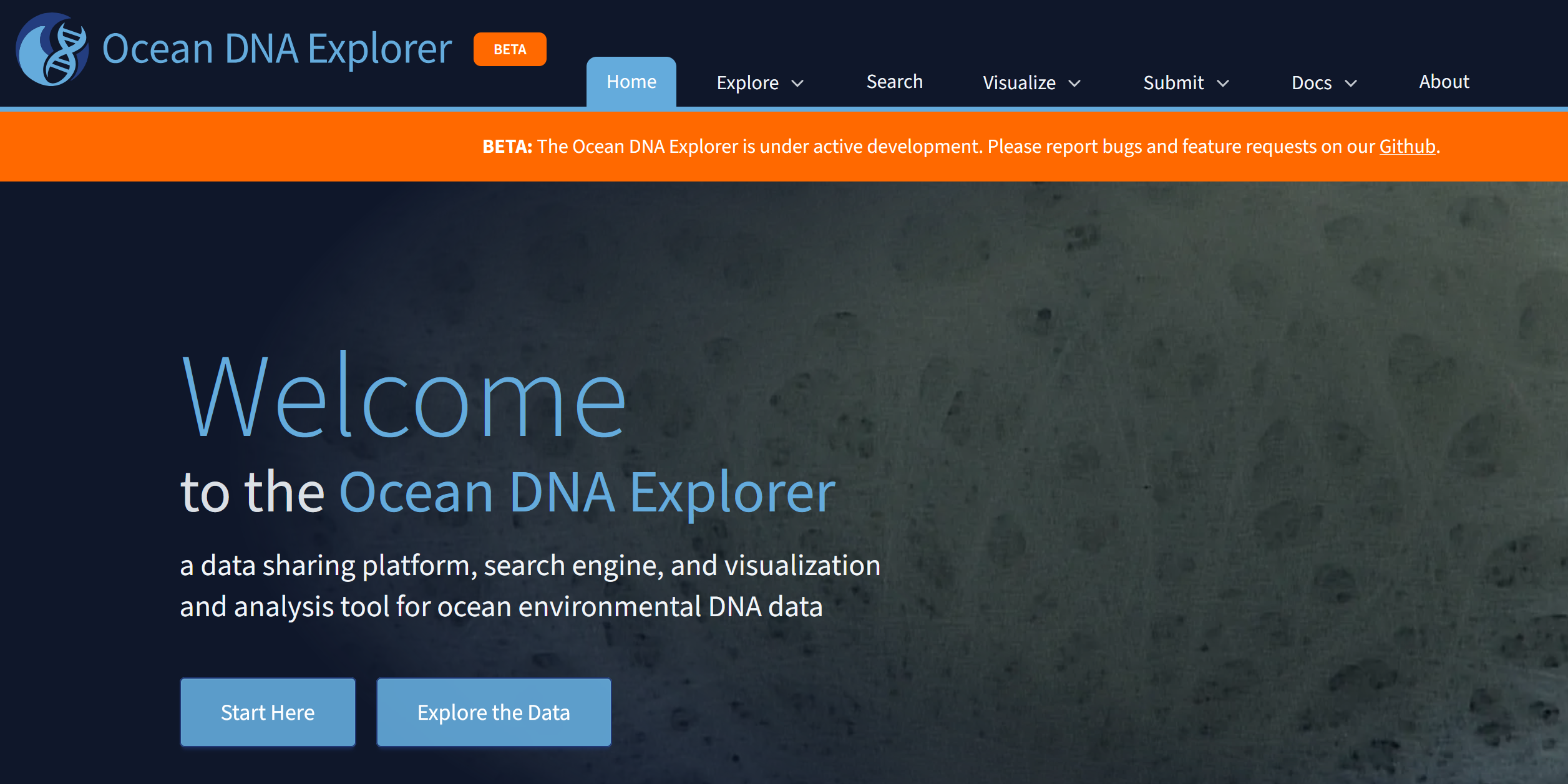
Ocean DNA Explorer
A data sharing platform, search engine, and visualization and analysis tool for ocean environmental DNA data.
Learn more
MBON Data Portal
Search, download, visualize, and analyze real-time, delayed-mode, and historical MBON biological observations alongside physical and chemical data.
Learn more
Genomics & eDNA
Environmental DNA extracted from water and sediment samples reveals the full community of organisms present — from bacteria to whales — with a speed and breadth impossible through visual surveys alone.
Learn more
MBON Pole to Pole Data Atlas
Harmonized rocky-shore and sandy-beach biodiversity observations from Canada to Patagonia, standardized for cross-regional comparison and open access via OBIS.
Learn more