
Acoustics
Passive acoustic monitoring listens to the soundscape of the sea; active acoustics enumerates fish and zooplankton. Together they cover the water column continuously, day and night.
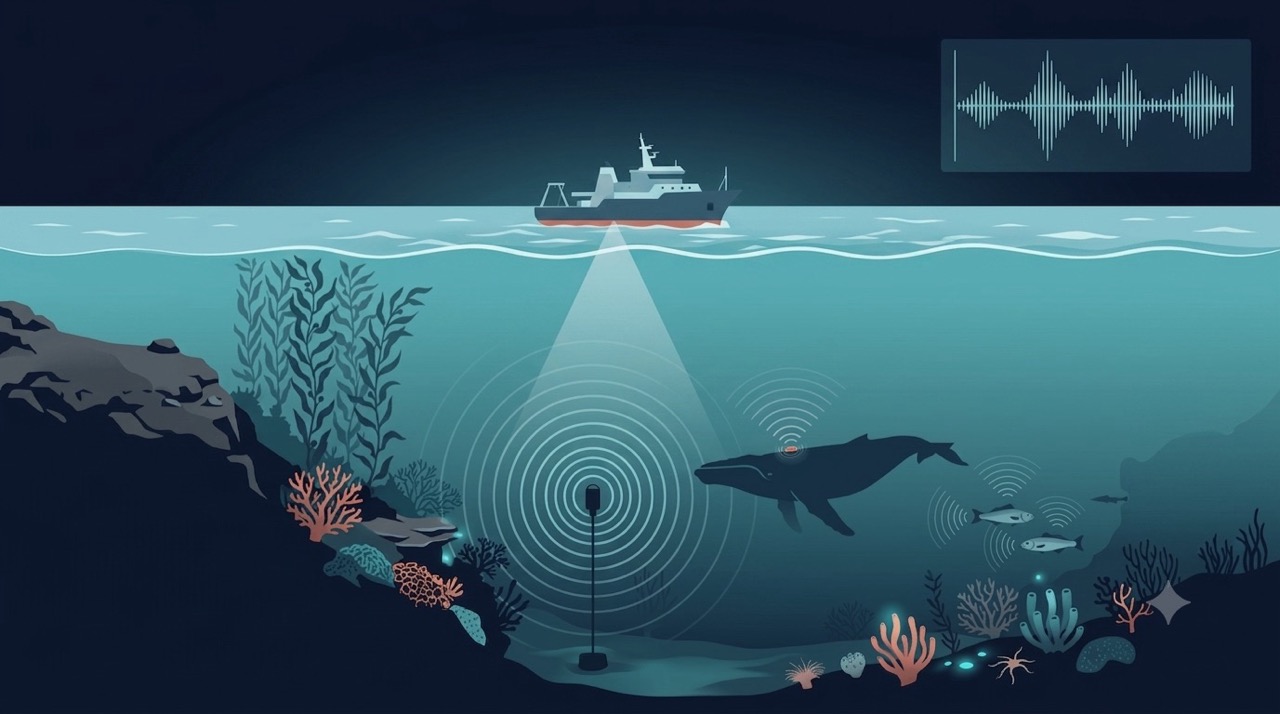
Sound travels efficiently through water, making acoustics one of the most powerful remote-sensing tools available for the ocean interior. MBON’s acoustics working group — operating under the BioSound thematic node — develops standards and products for both passive and active acoustic monitoring.
Passive acoustic monitoring (PAM)
PAM instruments listen continuously to the underwater soundscape, recording biological sounds (whale calls, fish choruses, snapping shrimp) alongside anthropogenic noise (shipping, sonar). Soundscape metrics derived from long-term PAM deployments function as indicators of ecosystem state: a healthy reef sounds different from a degraded one.
The BioSound working group focuses on harmonizing PAM data across IOOS regional networks so that soundscape time series from different instruments and environments can be compared.
Active acoustics
Echosounders and Acoustic Doppler Current Profilers (ADCPs) emit sound pulses and measure return echoes. This allows estimation of zooplankton and fish backscatter — a proxy for biomass — continuously along ship tracks or at moored stations. Active acoustics is the primary method for surveying mesopelagic biomass at depth and for monitoring aggregating species like krill and anchovies.
Products and data
- BioSound Data Explorer — interactive trends in soundscape biodiversity indices
- PAM resources and tools
- Annotated reference list
More ways MBON observes
Satellites and aerial sensors resolve ocean color, temperature, and habitat extent across millions of square kilometers — scales no ship survey can match.
Trawl surveys, visual transects, and ship-based acoustic surveys remain the calibration backbone of marine biodiversity monitoring — the gold standard that modern methods are validated against.
Electronic tags on fish, turtles, marine mammals, and seabirds reveal how animals move through and use ocean habitat — essential for conservation planning and understanding climate responses.
Environmental DNA extracted from water and sediment samples reveals the full community of organisms present — from bacteria to whales — with a speed and breadth impossible through visual surveys alone.
Raw observations become decision-relevant information through synthesis into Essential Ocean Variables, open data pipelines, and indicators that managers and policymakers can act on.
Rocky-shore and sandy-beach transects, photo quadrats, and intertidal surveys record coastal biodiversity — connecting the land-sea interface to the global observation network.

BioSound
Listening to the ocean — advancing passive acoustic monitoring as an indicator of marine biodiversity.
Learn more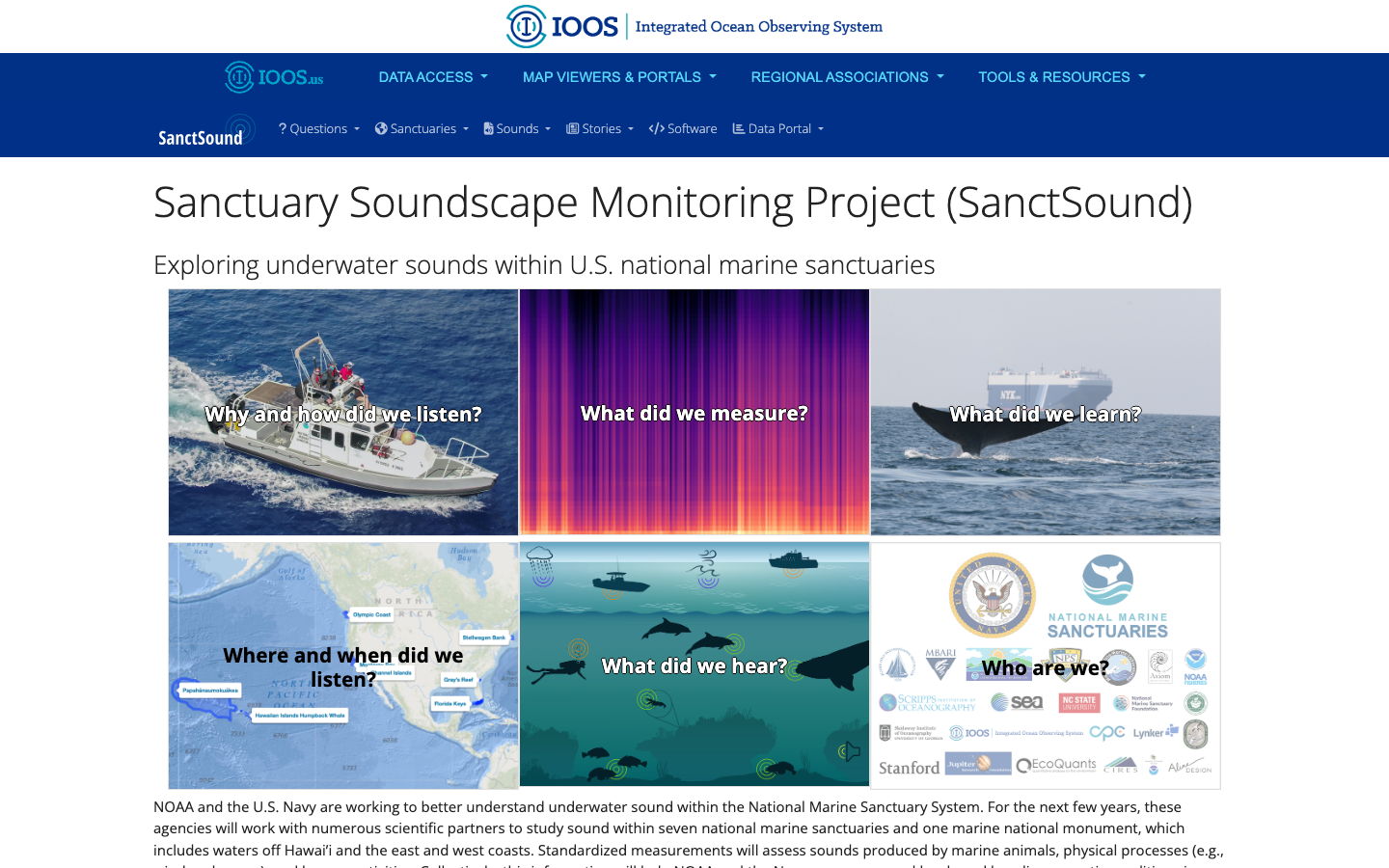
SanctSound
Sanctuary Soundscape Monitoring Project — explore underwater sound across U.S. national marine sanctuaries through illustrated question-and-answer panels.
Learn more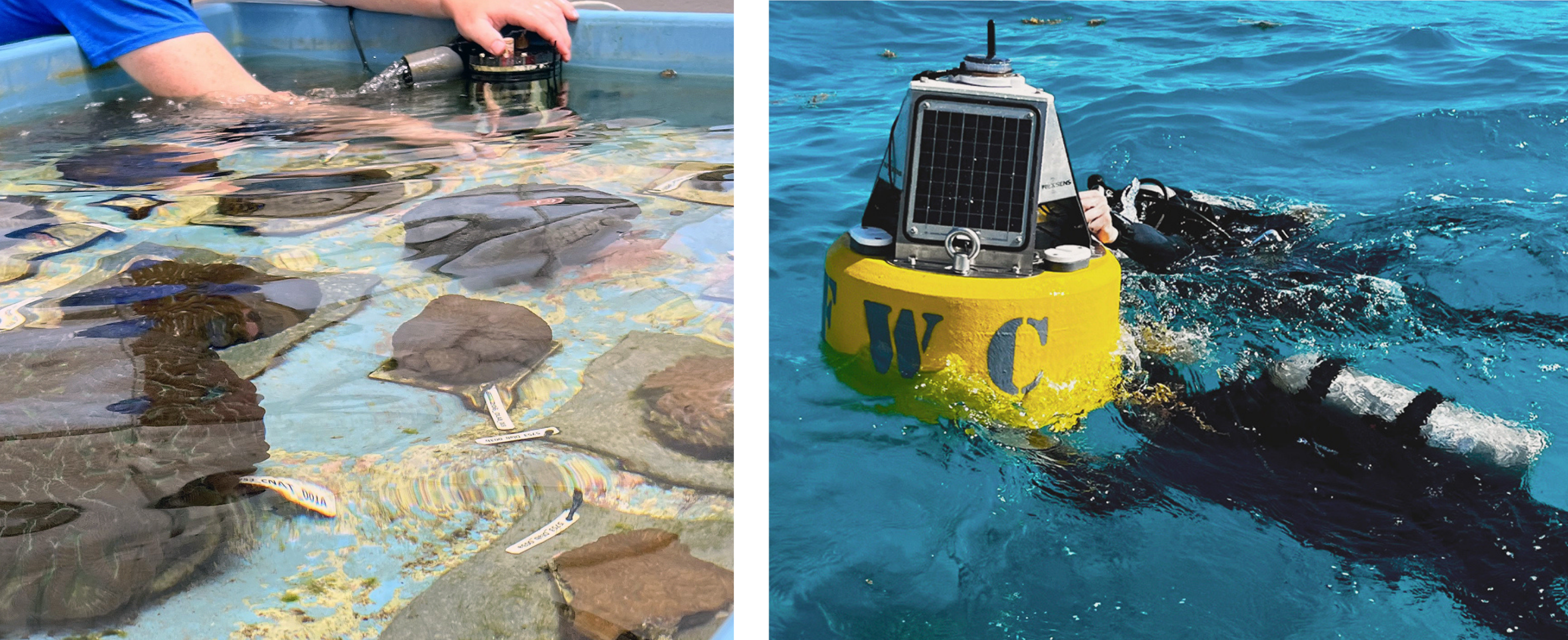
From a Whale’s Song to an Ocean’s Symphony: How AI Decodes Underwater Sound
Explore how SECOORA-funded research is using AI and machine learning to decode ocean soundscapes, detect boat noise, and support coral reef restoration efforts.
Read storyLA MBON Louisiana Oyster Reef-Associated Benthic Biodiversity - Biodiversity Information
This dataset contains abundance and biomass measurements of oyster-reef associated benthic biodiversity as well as extended measures of oyster reef health including sediment organic matter content, volume of reef material, volume and/or counts of live oysters,…
View datasetLA MBON Louisiana Oyster Reef-Associated Benthic Biodiversity - Oyster Sizes
This dataset contains abundance and biomass measurements of oyster-reef associated benthic biodiversity as well as extended measures of oyster reef health including sediment organic matter content, volume of reef material, volume and/or counts of live oysters,…
View datasetBioSound Working Group
BioSound working group session on estimating marine biodiversity with passive acoustic monitoring.
View details