
MBON + AIR BioData Mobilization Workshop
The Marine Biodiversity Observation Network (MBON) and the AIR Centre are hosting a small, hands-on, interactive workshop on mobilising marine biological observation datasets to OBIS , held 19–23 October 2026 at the AIR Centre in Terceira Island, Azores, Portugal. The five-day course is aimed at graduate students and researchers — no previous knowledge of the tools presented is assumed.
The objective is to show data holders why it pays to follow good practices for standardising biological data using widely accepted standards such as Darwin Core , across records of different biological attributes and ecosystem observations from different sampling methodologies. By the end of the workshop, each participant will have brought one of their own datasets to a final maturity state aligned with best practices for data sharing and biodiversity documentation — making marine biological data more available for scientific research, species conservation, and ecosystem-based management.
A complementary field day takes participants to a rocky shore for training in the collection and processing of benthic photo-quadrat imagery, and its analysis following MBON Pole to Pole monitoring protocols, building capacity for long-term monitoring of rocky intertidal communities.
The five days cover:
- Data access from OBIS — the OBIS Mapper and Portal, downloading records with R, and querying the OBIS API.
- Introduction to data standards and formatting — Darwin Core and the data life cycle, plus planning for data collection.
- Fieldwork — a full day on the rocky shore collecting photo-quadrat imagery.
- Photo-quadrat processing and dataset curation — image analysis, dataset structuring and quality control, taxon matching against the WoRMS Aphia ID match tool, OBIS QC checks, and eDNA data formats.
- Publishing your data in OBIS — the OBIS IPT and the roles of OBIS Nodes, followed by conclusions and closure.
Participants are expected to be familiar with taxonomic occurrence data, spreadsheet tools (Excel, LibreOffice, Google Sheets), handling CSV/TXT/Excel files, basic Python or R programming, and basic data wrangling for marine biodiversity data — and to bring a laptop with administrative privileges. Familiarity with sandy beach or rocky shore environments is not mandatory.
The workshop is in-person only, with no virtual option and no recordings, as the lessons build upon one another. The room is wheelchair and scooter accessible, and accessible restrooms are available.
Workshop registration is closed. The AIR Centre also funded researchers from institutions along the West Atlantic coast of Africa to attend. The full schedule and setup instructions remain public, as do the reference materials linked from each day’s session, for anyone who wants to follow the curriculum or reuse the exercises. For more information, contact joana.soares@aircentre.org .
Instructors
- Carolina Peralta — Institute for Marine Remote Sensing (IMaRS), University of South Florida College of Marine Science
- Tylar Murray — Institute for Marine Remote Sensing (IMaRS), University of South Florida College of Marine Science
- Nuno Álvaro — Institute of Agriculture and Environmental Research and Technology, University of the Azores
- Gonzalo Bravo — CONICET, Argentina
with helpers Joana Soares, Adriano Lima, and Enrique Montes.
Pole to Pole Americas
A network of networks spanning the Americas.
Learn moreData Management
Ensuring MBON observational data are FAIR — Findable, Accessible, Interoperable, and Reusable — from sensor to archive.
Learn more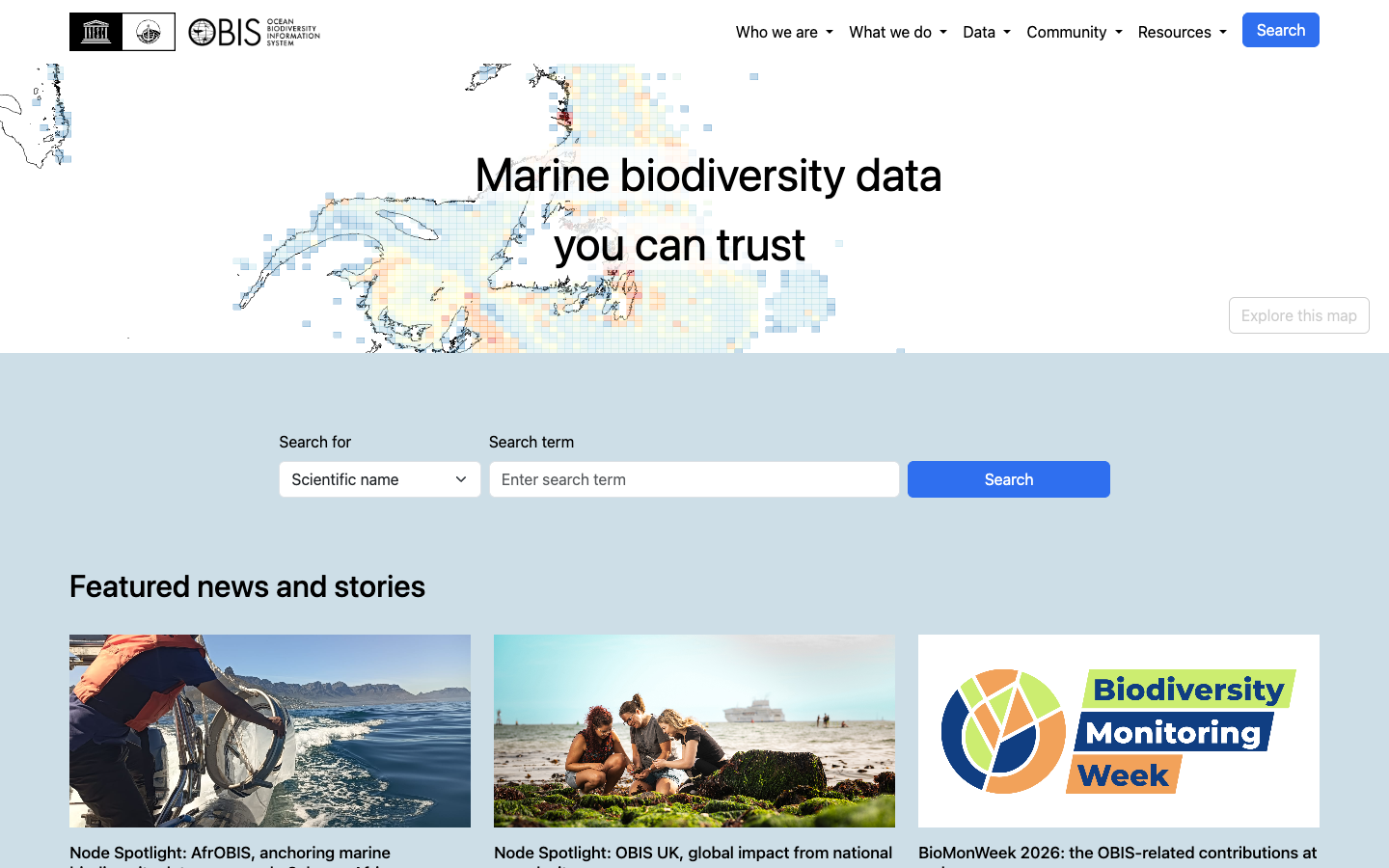
OBIS — Ocean Biodiversity Information System
The global open-access database for marine biodiversity — search, map, and download tens of millions of species occurrence records standardized to Darwin Core.
Learn more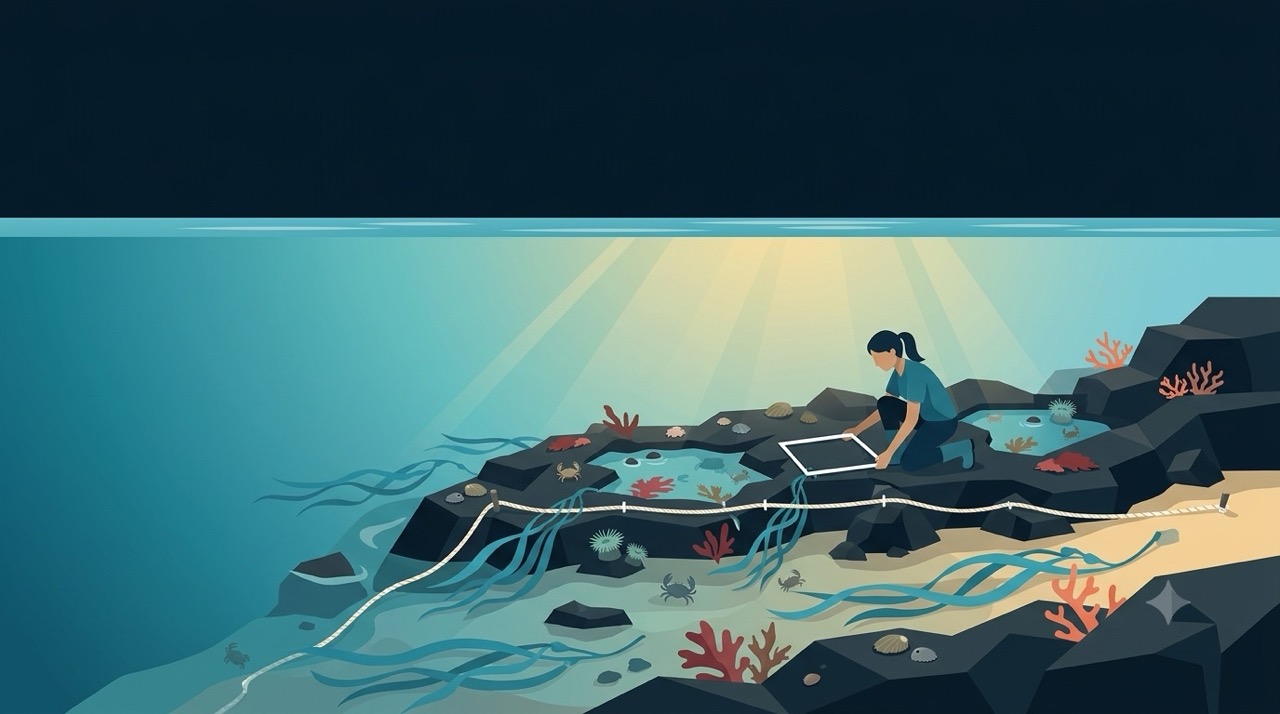
Benthic Surveys
Rocky-shore and sandy-beach transects, photo quadrats, and intertidal surveys record coastal biodiversity — connecting the land-sea interface to the global observation network.
Learn more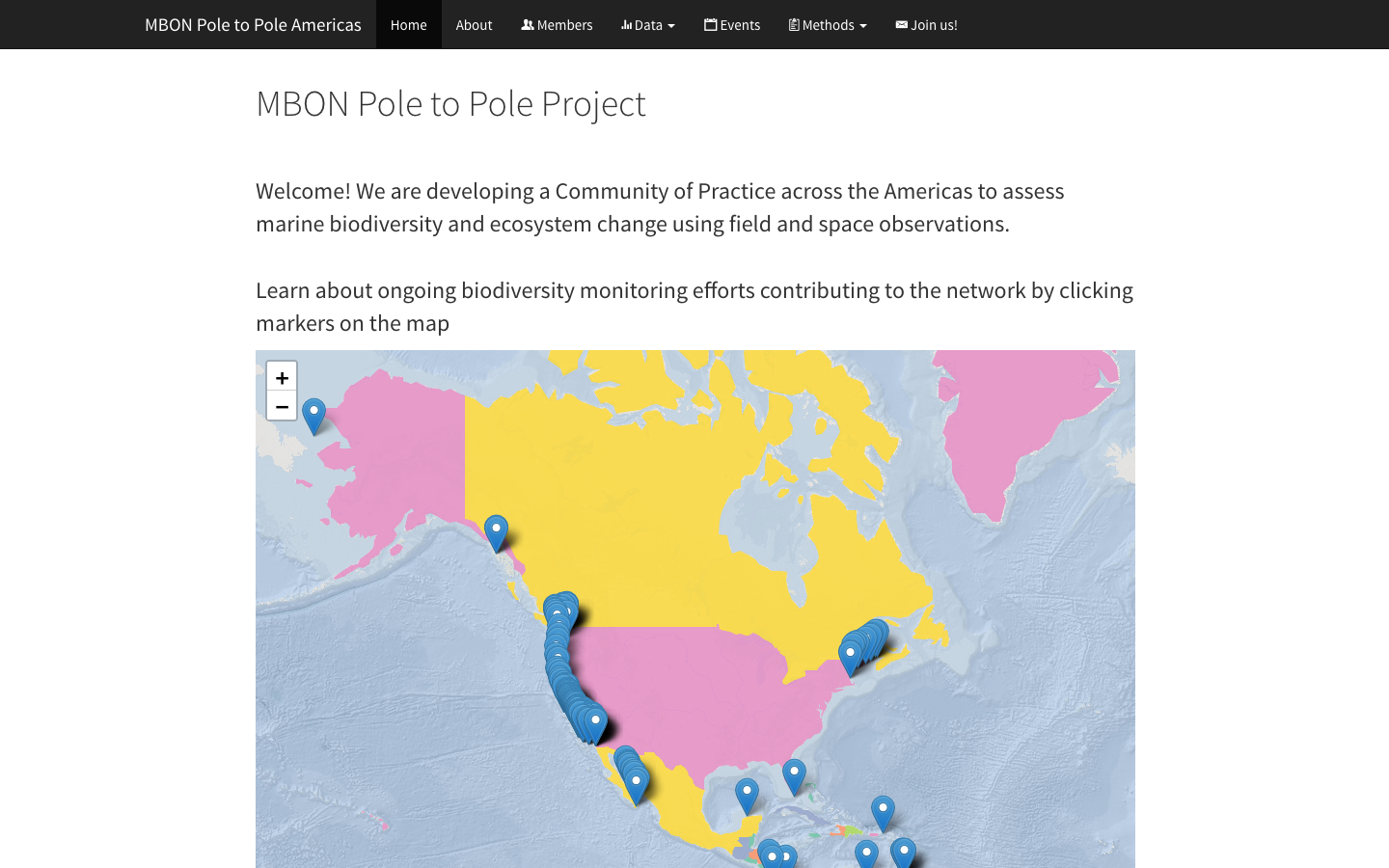
MBON Pole to Pole Data Atlas
Harmonized rocky-shore and sandy-beach biodiversity observations from Canada to Patagonia, standardized for cross-regional comparison and open access via OBIS.
Learn more
Bio Data Guide
Community guide and standards for mobilizing marine biological data to Darwin Core and OBIS, from the IOOS Standardizing Marine Biological Data Working Group.
Learn more