
S. California Bight MBON
CalCOFI-anchored monitoring of the Bight.
This project will continue the demonstration MBON in the Santa Barbara Channel, and expand it to the entire Southern California Bight (SCB) region. The focus on SCB allows the team to cover the complete spectrum of biodiversity from ecosystems to microbes due to the profusion of existing biological monitoring and research programs by our partners including government agencies, universities and NGOs. The project will use a pincer strategy to address these issues, using remote sensing, optical and acoustic imagery to approach diversity from ecosystem scales downwards and genetics to assess diversity from genes and microbes upwards with the goal of developing future capacity for satellite observation of marine biodiversity.
The team will develop and validate optical oceanographic measures of pelagic planktonic biodiversity from the Plumes and Blooms (PnB) time-series study applied to SCB MBON genomics and other observations of phytoplankton diversity. Observation and modeling of SBC Long-Term Ecological Research program (LTER) kelp forest sites using hyperspectral drone imagery and Landsat satellite observations will be focused on the simultaneous assessments of giant kelp and phytoplankton. Expanded use of imagery will be facilitated using cutting-edge machine learning image analysis techniques developed by the UCSB Center for BioImage Informatics and ViQi. Imaging will be paired with acoustics to observe fish diversity.
Metabarcoding and eDNA analyses will benefit from state-of-the-art molecular biology labs at the NOAA Southwest Fisheries Science Center and UCSB and partnership with CalCOFI and SCCWRP. The overall objective is to provide a complete picture of biodiversity in SCB using a transferable system that integrates and augments existing monitoring programs. The data management component of the project distributes research quality citable data with stable DOIs that will be visualized on the project website as well as the MBON Portal. Products created by SCB MBON will include geographically-integrated time-series metrics of biodiversity, a transferable MBON data management system, and dissemination of products and results to a wide range of end users from scientists to schoolchildren.
Explore nearby networks
Marine zooplankton community structure through environmental DNA metabarcoding in the Florida Keys, collected by the South Florida Program (NOAA/AOML) and the Marine Biodiversity Observation Network (MBON)
This data consists of counts of putative zooplankton OTUs, revealed through metabarcoding of the cytochrome oxidase I (COI) gene extracted from filtered water samples in the Florida Keys National Marine Sanctuary during 2016.
View dataset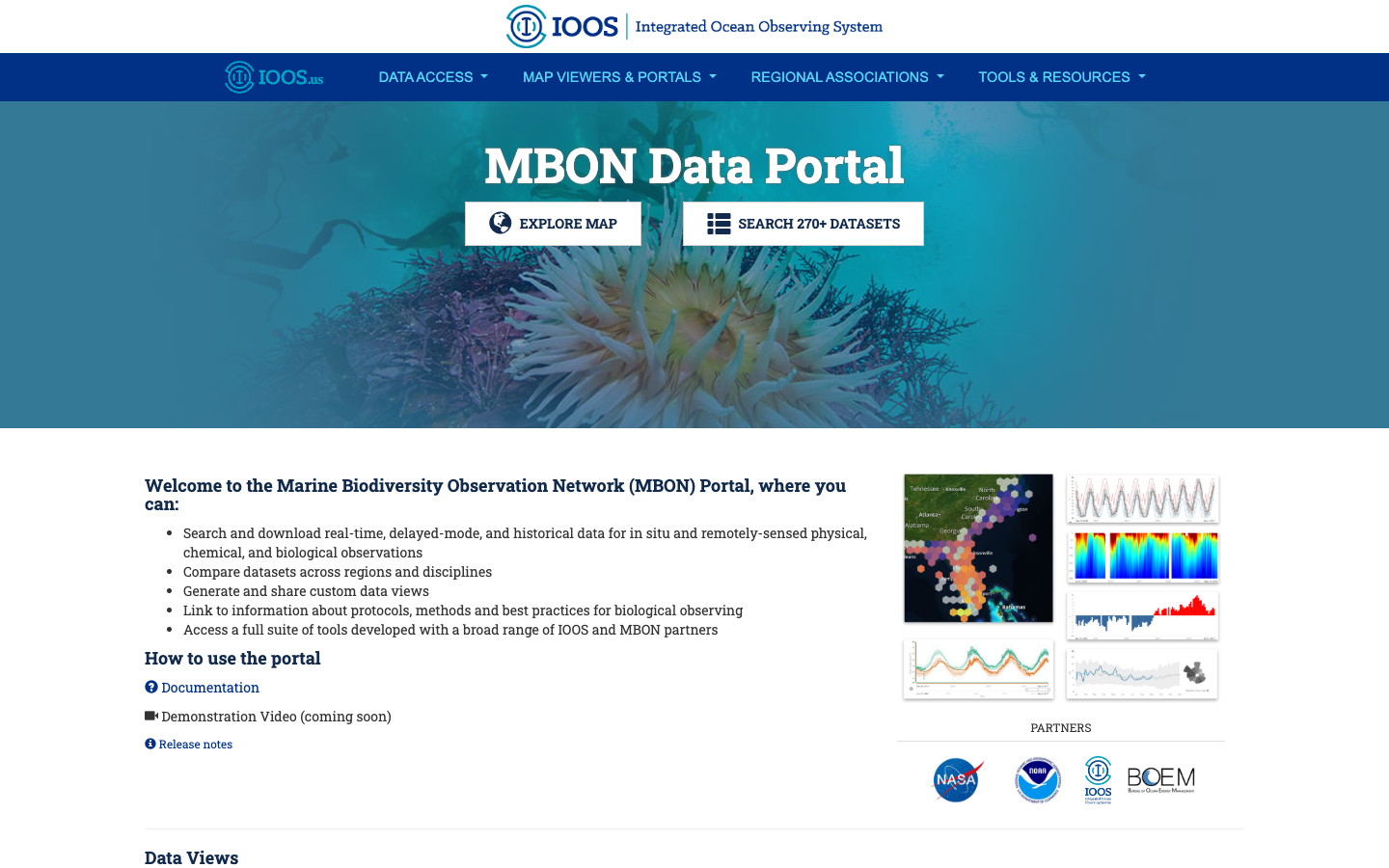
MBON Data Portal
Search, download, visualize, and analyze real-time, delayed-mode, and historical MBON biological observations alongside physical and chemical data.
Learn more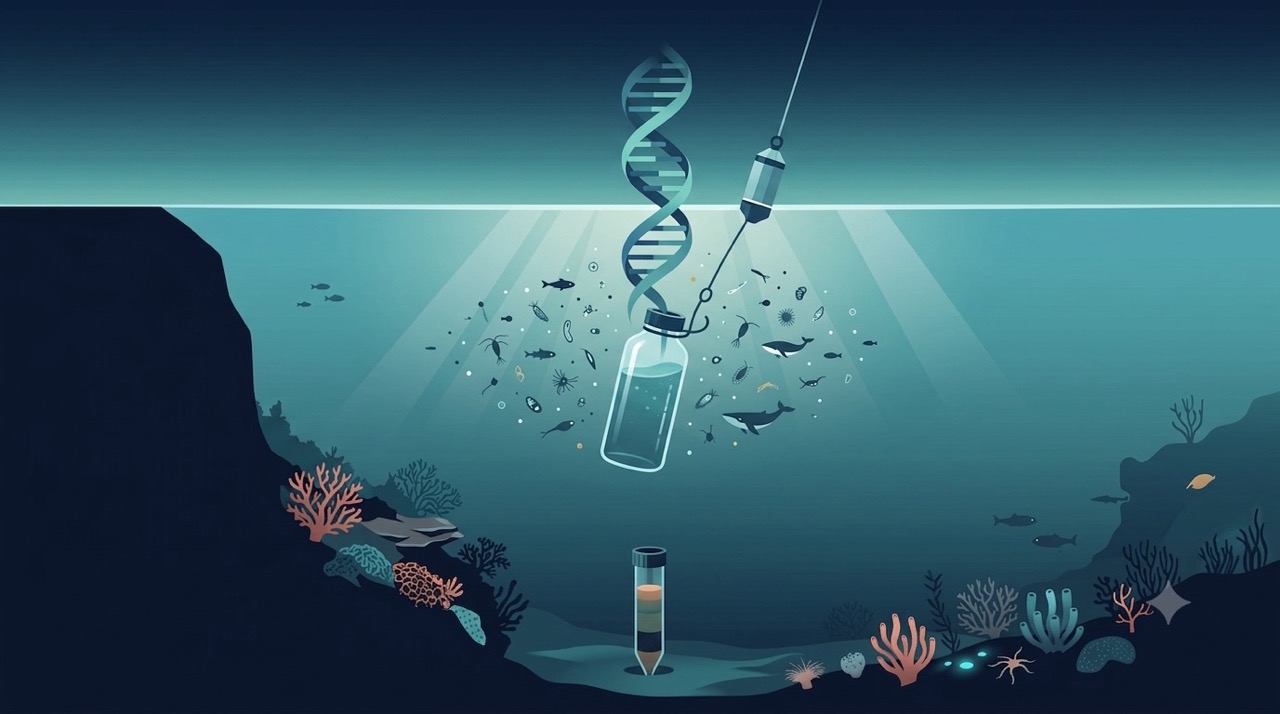
Genomics & eDNA
Environmental DNA extracted from water and sediment samples reveals the full community of organisms present — from bacteria to whales — with a speed and breadth impossible through visual surveys alone.
Learn more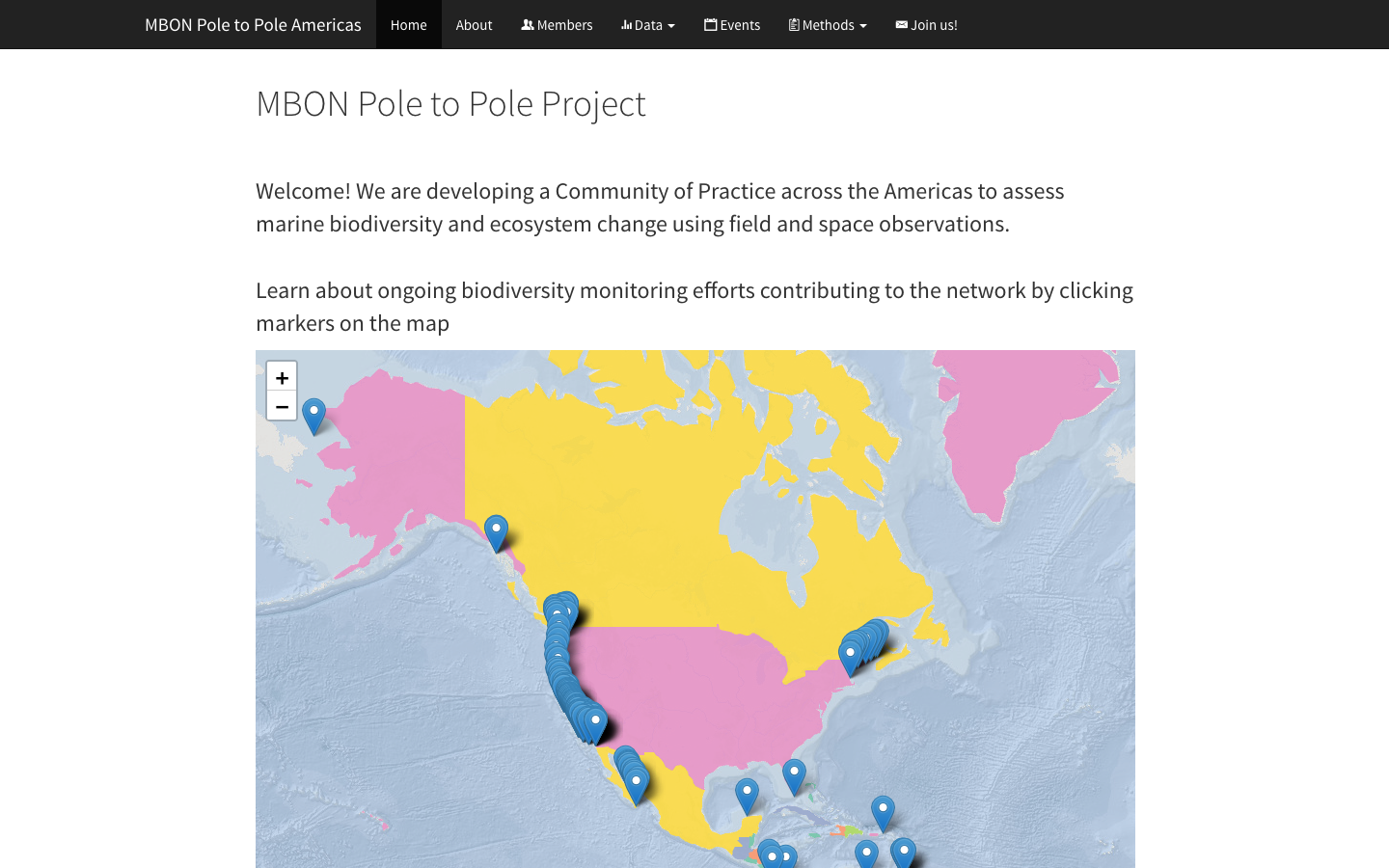
MBON Pole to Pole Data Atlas
Harmonized rocky-shore and sandy-beach biodiversity observations from Canada to Patagonia, standardized for cross-regional comparison and open access via OBIS.
Learn more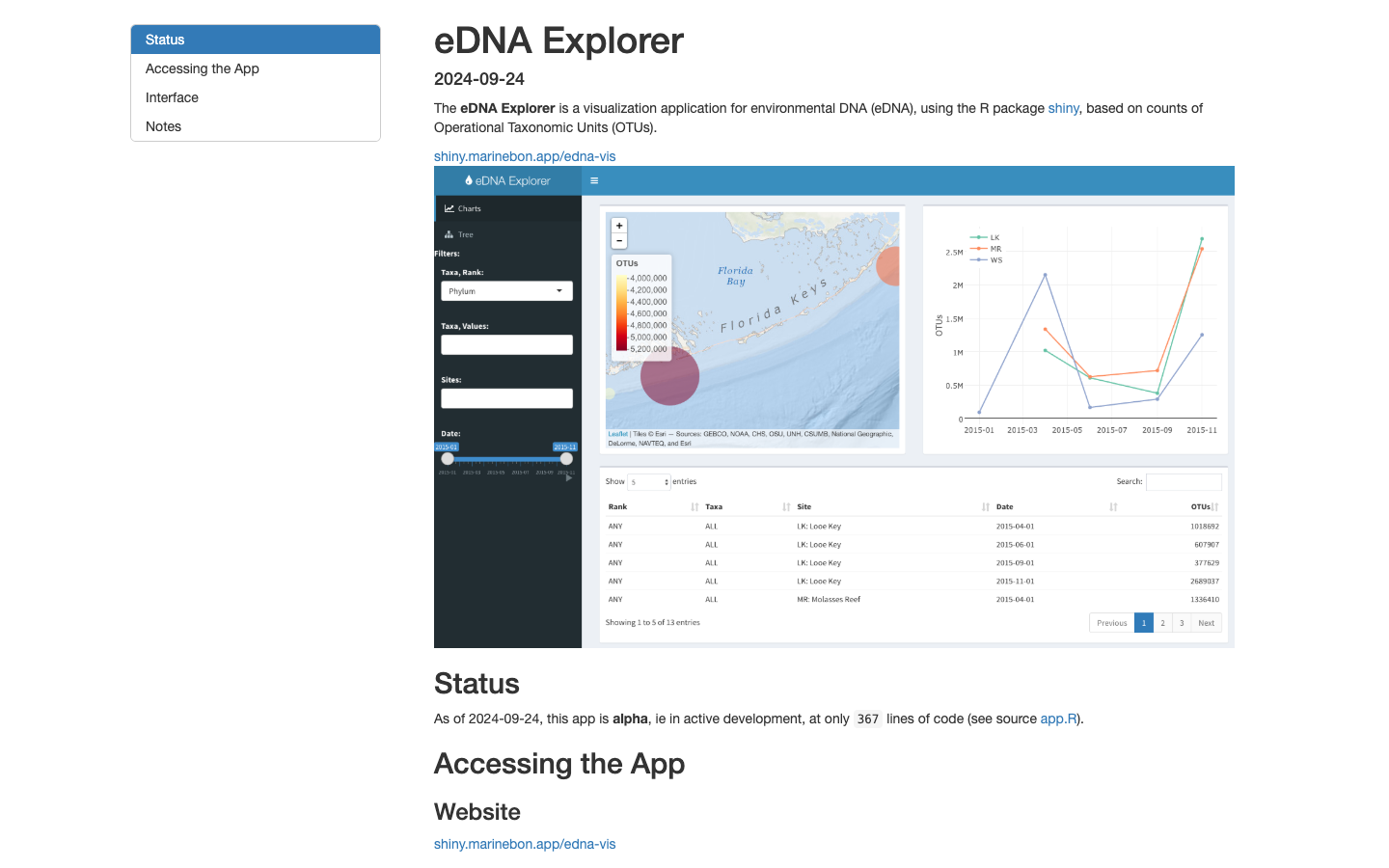
eDNA Visualization
Interactive visualization of environmental DNA (eDNA) detections across taxa and sites.
Learn more
User Story: Bringing Steinbeck & Ricketts into the MBON Era
Over 85 years after Steinbeck and Ricketts documented life in the Sea of Cortez tidepools, a binational team retraces their expedition using MBON Pole-to-Pole protocols and eDNA to measure decades of biodiversity change.
Read story