
Mid-Atlantic MBON
Wind-energy planning and shelf biodiversity.
The Mid-Atlantic MBON project integrates cutting edge biological information with ocean observations to develop new data products, analytical tools, and information resources supporting ocean and coastal management. The project will provide dynamic biodiversity information at timescales relevant for fisheries management, offshore energy, and other stakeholders to support jobs, the economy, safety and well-being for the more than 78 million people living, visiting, and working in the Mid-Atlantic Bight.
The U.S. Mid-Atlantic coast is a region of dynamic change, with pronounced seasonal variation in biodiversity driven by temperature and oceanographic processes, powerful storms, and infrastructure development. Iconic endangered species such as North Atlantic right whales and Atlantic sturgeon and important fishery species such as striped bass and coastal sharks undergo long-distance annual migrations through the region. Other commercially important species such as Atlantic sea scallops and black sea bass are long-term residents dependent on unique oceanographic features like the U.S. Mid-Atlantic Bight Cold Pool. The project will increase our understanding of patterns and changes in biodiversity and advance the transition from intermittent vessel-based observations and sampling to coordinated, co-located observations and models on a monthly- to daily-scale, which are needed by decision-makers.
The project will create a regionally unique archive of co-located biological data (from environmental DNA [eDNA], animal telemetry, and passive acoustic monitoring) and oceanographic data (high frequency [HF] radar, gliders, satellites, models). Regional models and information tools derived from these data will be co-developed with diverse stakeholders to inform future monitoring efforts for stock and ecosystem assessments, place-based management (e.g., fisheries management, offshore energy leasing and permitting, marine sanctuary planning), and other regional efforts. Novel open access datasets (e.g., HF radar climatologies, biodiversity hotspot and species distribution models) will be made available through the MBON Portal, MARACOOS OceansMap, Atlantic Cooperative Telemetry Network, OBIS, NCEI and other relevant platforms. Education materials will be developed and distributed via the Smithsonian Institution’s Ocean Portal and other partner activities.
The U.S. Mid-Atlantic MBON is co-led by MARACOOS and the Smithsonian Environmental Research Center. Collaborating institutions include Blue Wave Consulting Group, Johns Hopkins University Applied Physics Laboratory, the National Museum of Natural History, RPS (a TetraTech Company), Rutgers University, University of Delaware, and University of Maryland Center for Environmental Science. The project features the demonstration of an integrated biodiversity and telemetry observation program in the location of the Maryland Wind Energy Lease Area, leveraging an ongoing monitoring program supported by U.S. Wind, Inc.
Explore nearby networks
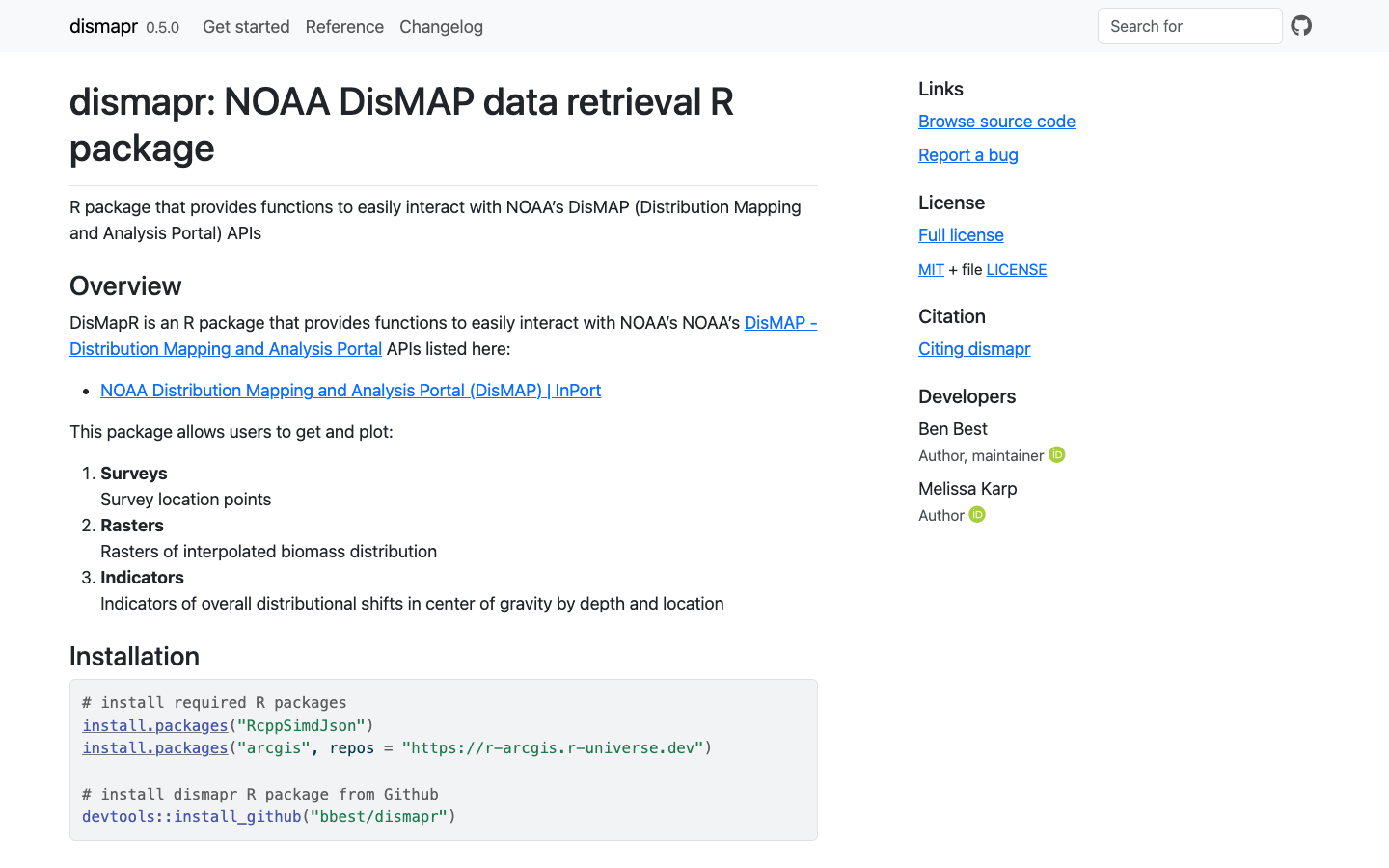
dismapr
R package with functions to interact with NOAA's Distribution Mapping and Analysis Portal (DisMAP) APIs for species distribution and range-shift data.
Learn moreMarine zooplankton community structure through environmental DNA metabarcoding in the Florida Keys, collected by the South Florida Program (NOAA/AOML) and the Marine Biodiversity Observation Network (MBON)
This data consists of counts of putative zooplankton OTUs, revealed through metabarcoding of the cytochrome oxidase I (COI) gene extracted from filtered water samples in the Florida Keys National Marine Sanctuary during 2016.
View dataset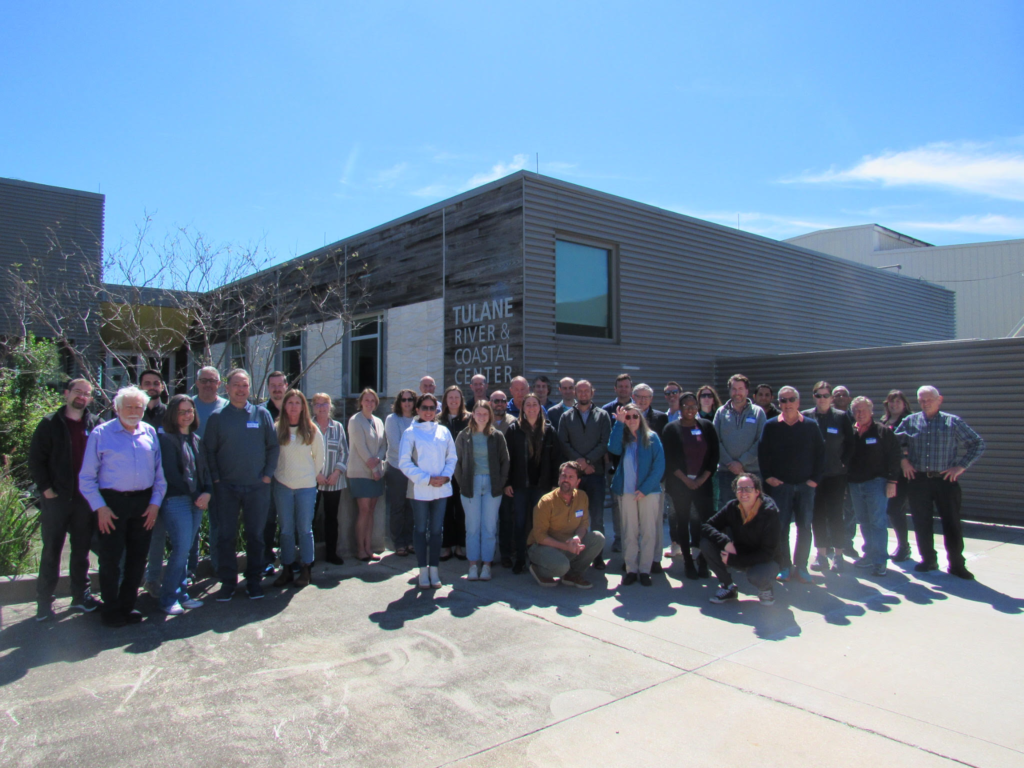
MBON All Hands 2024: Ten Years of U.S. MBON
The U.S. MBON celebrated the tenth anniversary of its pilot projects at its annual All-Hands Workshop in New Orleans, bringing together scientists, agency partners, and international collaborators.
Read storyCan we manage fisheries with the inherent uncertainty from eDNA?
Christopher L. Jerde · Journal of Fish Biology
Read paper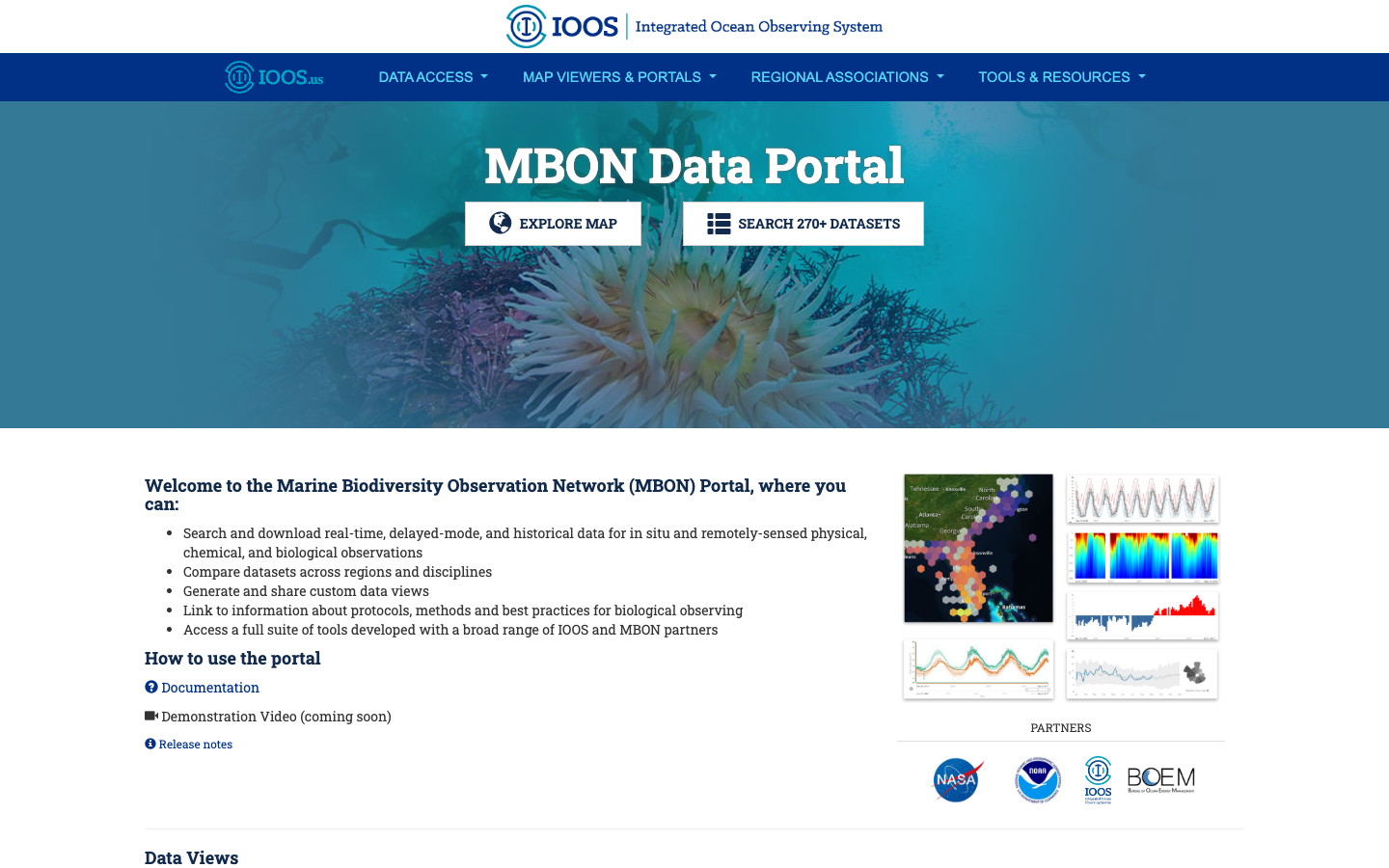
MBON Data Portal
Search, download, visualize, and analyze real-time, delayed-mode, and historical MBON biological observations alongside physical and chemical data.
Learn more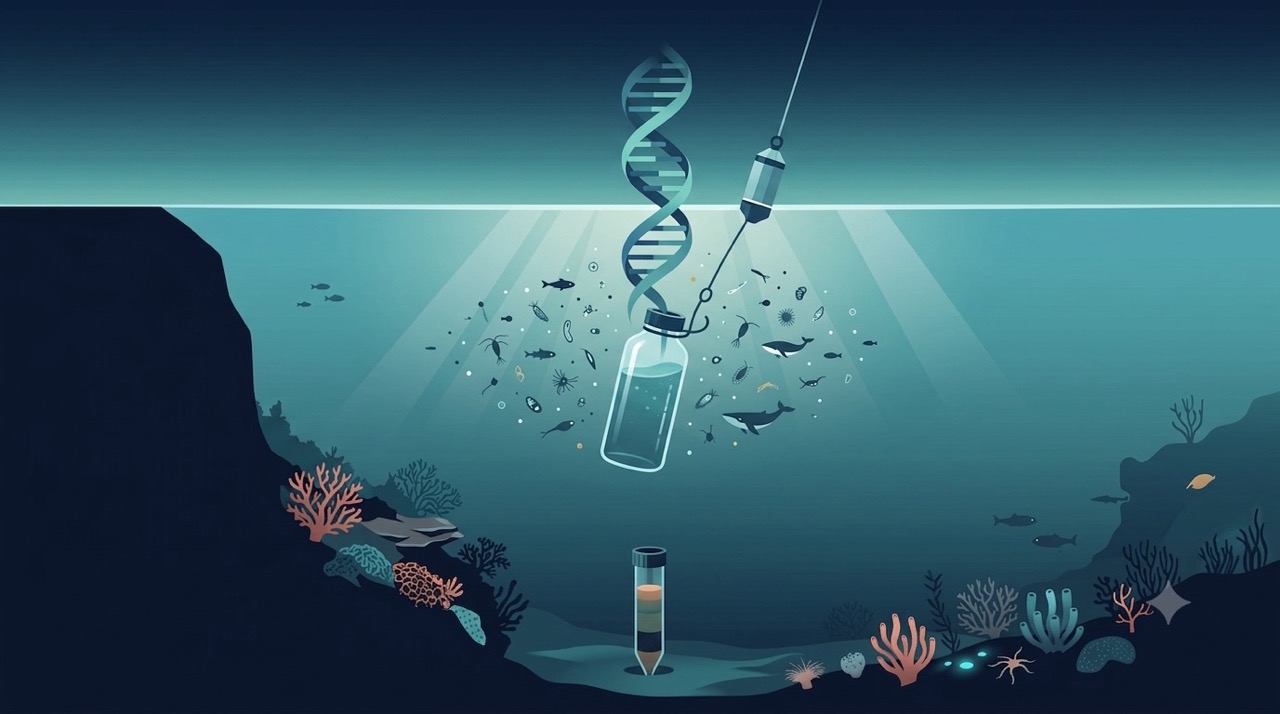
Genomics & eDNA
Environmental DNA extracted from water and sediment samples reveals the full community of organisms present — from bacteria to whales — with a speed and breadth impossible through visual surveys alone.
Learn more