
Arctic MBON
Pan-Arctic biodiversity observing across a rapidly changing ocean.
Unprecedented changes are occurring in the Arctic and affect all components of Arctic marine ecosystems, including humans. However, consistent, long-term observations for planning and adaptation are currently lacking in the Arctic Ocean. AMBON is working towards a sustainable approach to biodiversity observing in the Chukchi Sea as one component of the development of a national MBON.
Grounded in the concept that sustained biodiversity across ecosystem components is critical for maintaining healthy ecosystem functions, this project is building on lessons learned from the first 5-year AMBON demonstration project. Using strategic collaborations, the new project will add currently un-observed essential ocean variables (EOV) to other, ongoing long-term research programs in a sustainable way to conduct logistically costly observations in the Arctic. This approach ensures that biodiversity is measured across multiple scales of diversity – from microbes to whales. We specifically propose to link to and enhance a stationary mooring array in the northern Chukchi Sea (Chukchi Ecosystem Observatory) that provides year-round environmental and biological observations.
AMBON will use innovative technological approaches, such as the moored water sampler that collects year-round eDNA samples, a sediment trap to sample phytoplankton, and passive acoustics to observe vocalizing marine mammal presence. In addition, we will add two emerging EOVs – microbes (through eDNA collections) and epibenthic invertebrates – as well as fish and seabird collections to an existing, spatially expansive sampling program in the Chukchi Sea, the Distributed Biological Observatory (DBO-NCIS). Together, the two programs link biodiversity observations across time and space. Finally, we propose to link results from organismal observations to remotely sensed seascapes, which have recently become available for the Arctic.
All biodiversity observations will be related to a full suite of environmental measurements that help understand diversity patterns in space and time. Data publication and visualization is a strong focus of this proposal and we will continue to meet standard data formats (metadata, Darwin Core) to publish data on the MBON Portal, archive data at NCEI, and provide data to OBIS.
AMBON is partnering with two end user groups to integrate AMBON data with specific management needs in the Arctic. One partnership is with NOAA’s Integrated Ecosystem Assessment (IEA) program to help develop and inform an IEA for the Chukchi Sea. The second partner is the NOAA-led US Arctic Observing Network (US AON) to link scientific observations to a variety of arctic stakeholders, such as industry, Alaska Native communities, management agencies, and a large research community in a meaningful and informative manner. The project also maintains strong linkages to BOEM’s Environmental Studies Program (listed as area of interest for FY2019 in BOEM’s Alaska Annual Studies Plan to expand AMBON work into the Beaufort Sea).
In addition, connecting AMBON with other available data streams on the Alaska IOOS Regional Association’s (AOOS) Arctic Portal will lead to useful data products for the stakeholder community. Beyond the Arctic regional scale, the sustainable AMBON project will collaborate with other funded MBON projects to continue to work on developing a national network. Enhanced focus on these collaborations will help define common observing elements and their implementation in a national plan and identify elements that may need adaptive sampling strategies. As part of GEO BON, this US MBON collaboration connects to a growing international effort to understand marine biodiversity and harmonize efforts for long-term, sustained observations.
Explore nearby networks
Marine zooplankton community structure through environmental DNA metabarcoding in the Florida Keys, collected by the South Florida Program (NOAA/AOML) and the Marine Biodiversity Observation Network (MBON)
This data consists of counts of putative zooplankton OTUs, revealed through metabarcoding of the cytochrome oxidase I (COI) gene extracted from filtered water samples in the Florida Keys National Marine Sanctuary during 2016.
View dataset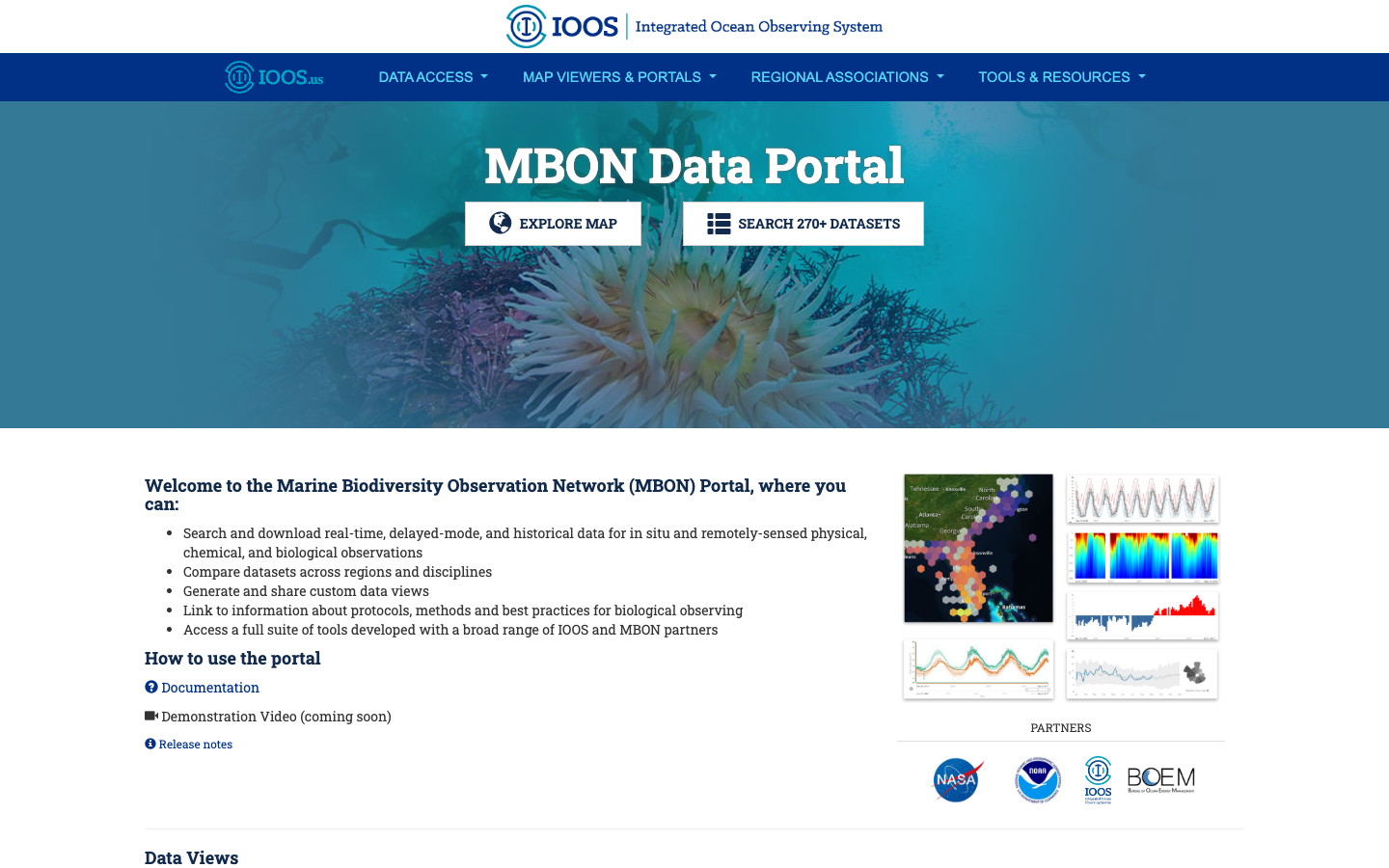
MBON Data Portal
Search, download, visualize, and analyze real-time, delayed-mode, and historical MBON biological observations alongside physical and chemical data.
Learn more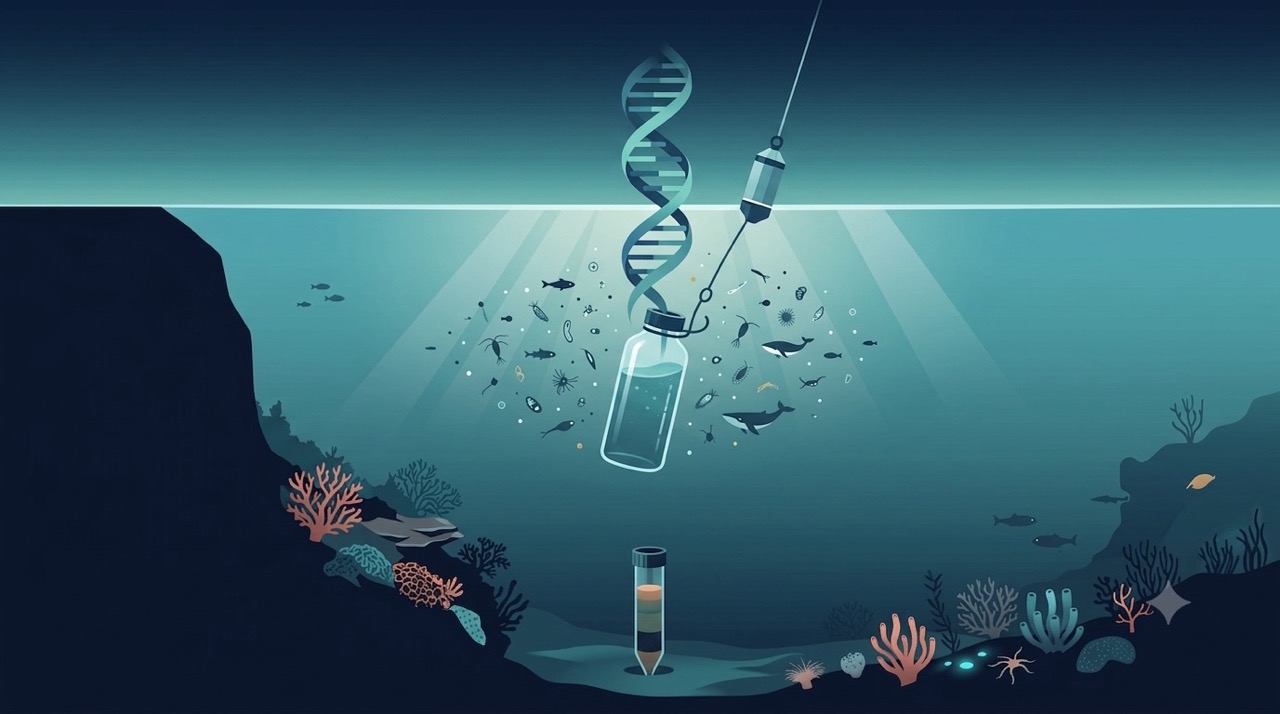
Genomics & eDNA
Environmental DNA extracted from water and sediment samples reveals the full community of organisms present — from bacteria to whales — with a speed and breadth impossible through visual surveys alone.
Learn more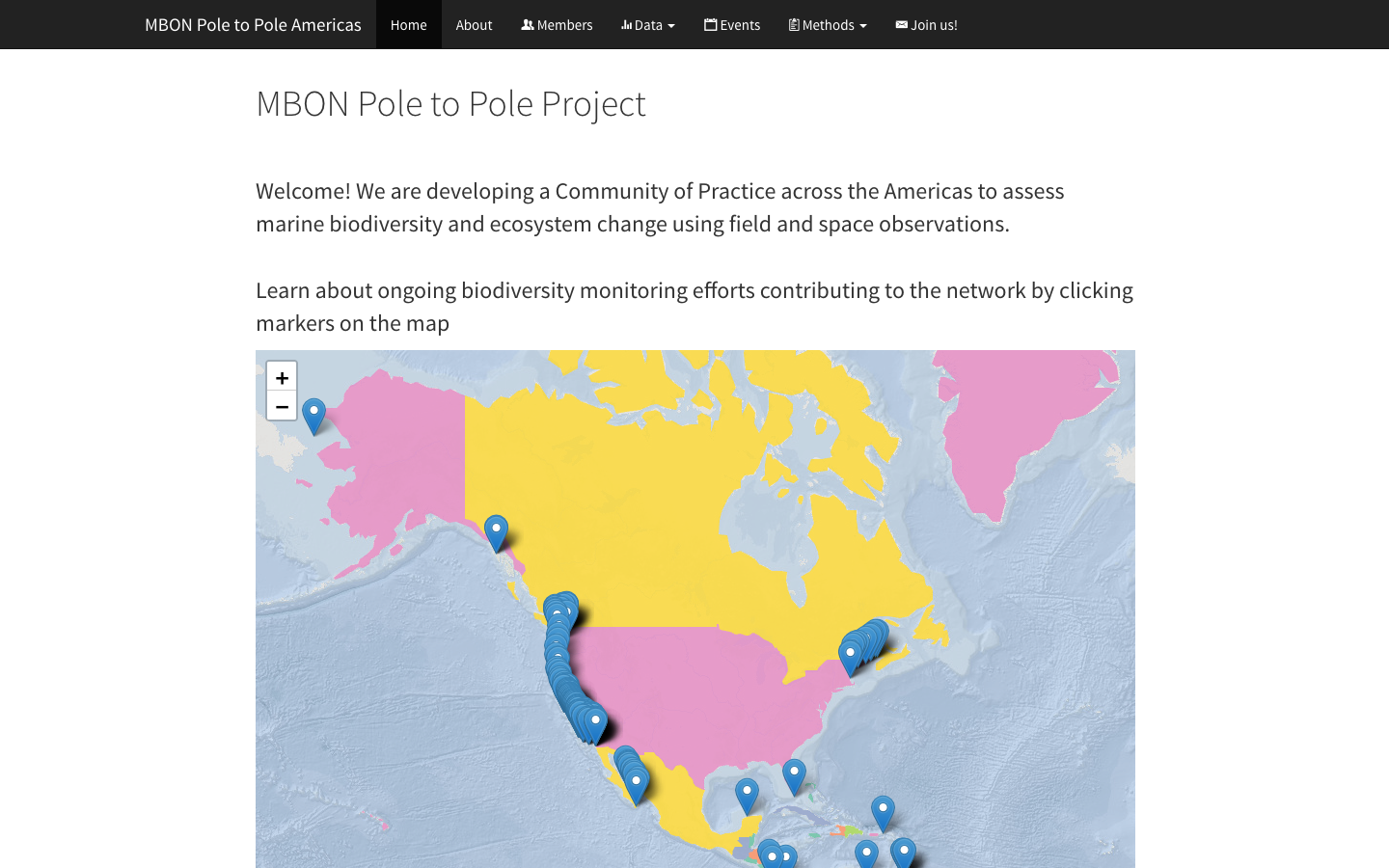
MBON Pole to Pole Data Atlas
Harmonized rocky-shore and sandy-beach biodiversity observations from Canada to Patagonia, standardized for cross-regional comparison and open access via OBIS.
Learn more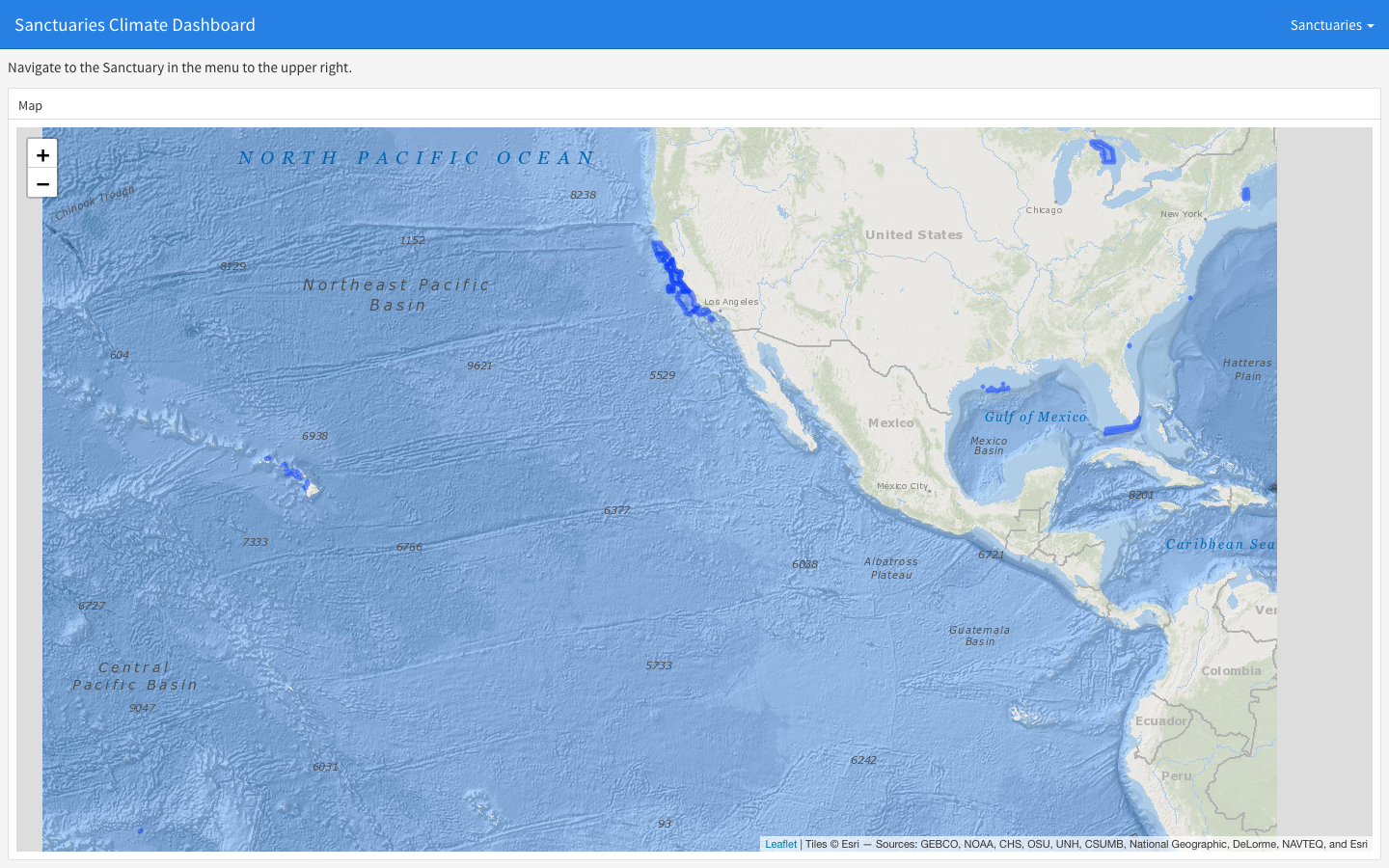
Sanctuaries Climate Dashboard
Static flexdashboard rendering climate indicators — sea surface temperature, chlorophyll-a, pH, sea-level rise — for each U.S. National Marine Sanctuary.
Learn more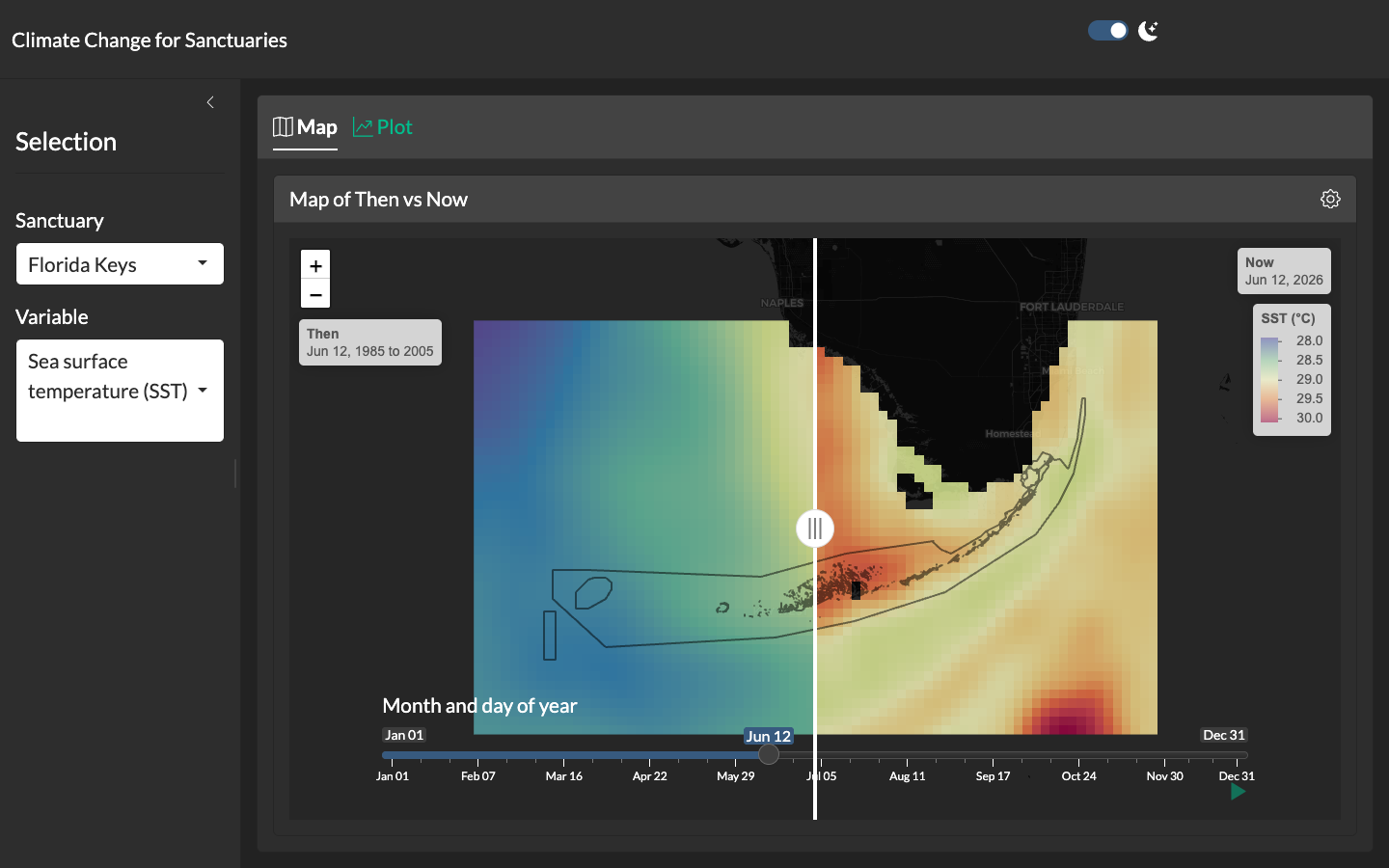
Climate Change for Sanctuaries
Shiny application with a swipeable "then vs. now" map comparing climatological reference periods to the present for each U.S. National Marine Sanctuary.
Learn more