
Genomics & eDNA
Environmental DNA extracted from water and sediment samples reveals the full community of organisms present — from bacteria to whales — with a speed and breadth impossible through visual surveys alone.
Every organism in the ocean continuously sheds cells, mucus, feces, and gametes — all carrying DNA. Filtering seawater and extracting this environmental DNA (eDNA), then sequencing and comparing it against reference databases, produces a species inventory of the community that passed through that water over recent hours to days.
Metabarcoding
DNA metabarcoding amplifies short, taxonomically informative gene regions (barcodes) from environmental samples. A single water filter can yield detection of hundreds of fish species, invertebrates, plankton, and marine mammals simultaneously. MBON has deployed metabarcoding protocols at long-term monitoring stations from the Arctic to the subtropics, building the first globally comparable eDNA biodiversity time series.
Metagenomics and metatranscriptomics
Shotgun sequencing of all DNA (metagenomics) or RNA (metatranscriptomics) in a water sample provides functional information alongside taxonomy — what genes and metabolic pathways are active in the community, not just which species are present. This unlocks questions about ecosystem function that traditional surveys cannot address.
Standardization and reference databases
The power of eDNA depends critically on high-quality reference sequence databases. MBON collaborates with the Barcode of Life Data System (BOLD), NCBI, and the OBIS eDNA working group to curate marine reference libraries and develop standard operating procedures for field collection, preservation, extraction, amplification, and bioinformatic analysis.
Working groups
The MBON eDNA working group coordinates protocols and data across regional nodes, contributing to the development of the eDNA Essential Ocean Variable (EOV) framework under GOOS.
More ways MBON observes
Satellites and aerial sensors resolve ocean color, temperature, and habitat extent across millions of square kilometers — scales no ship survey can match.
Trawl surveys, visual transects, and ship-based acoustic surveys remain the calibration backbone of marine biodiversity monitoring — the gold standard that modern methods are validated against.
Passive acoustic monitoring listens to the soundscape of the sea; active acoustics enumerates fish and zooplankton. Together they cover the water column continuously, day and night.
Electronic tags on fish, turtles, marine mammals, and seabirds reveal how animals move through and use ocean habitat — essential for conservation planning and understanding climate responses.
Raw observations become decision-relevant information through synthesis into Essential Ocean Variables, open data pipelines, and indicators that managers and policymakers can act on.
Rocky-shore and sandy-beach transects, photo quadrats, and intertidal surveys record coastal biodiversity — connecting the land-sea interface to the global observation network.
eDNA
Developing standardized environmental DNA protocols and pipelines for marine biodiversity assessment across MBON nodes.
Learn more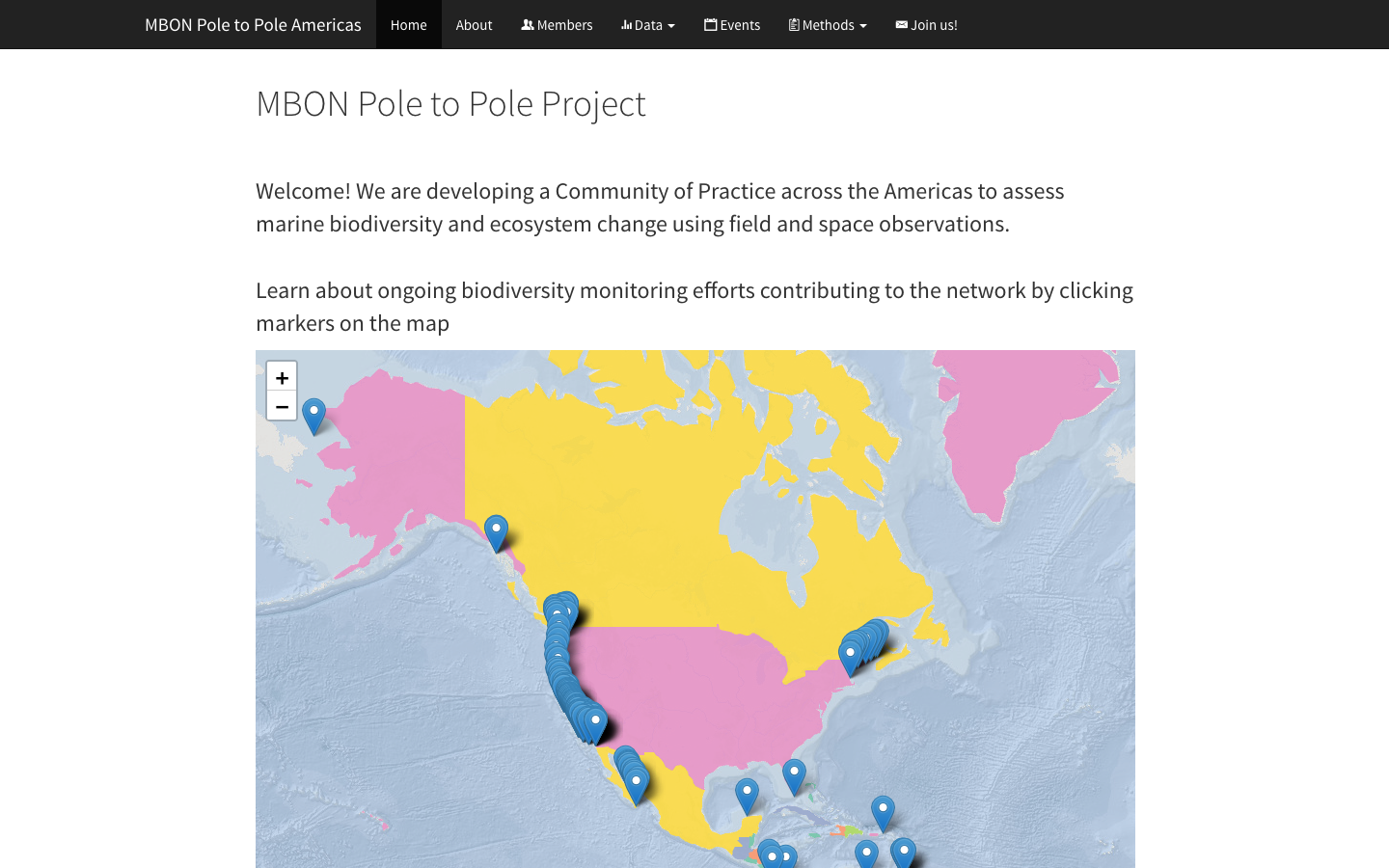
MBON Pole to Pole Data Atlas
Harmonized rocky-shore and sandy-beach biodiversity observations from Canada to Patagonia, standardized for cross-regional comparison and open access via OBIS.
Learn more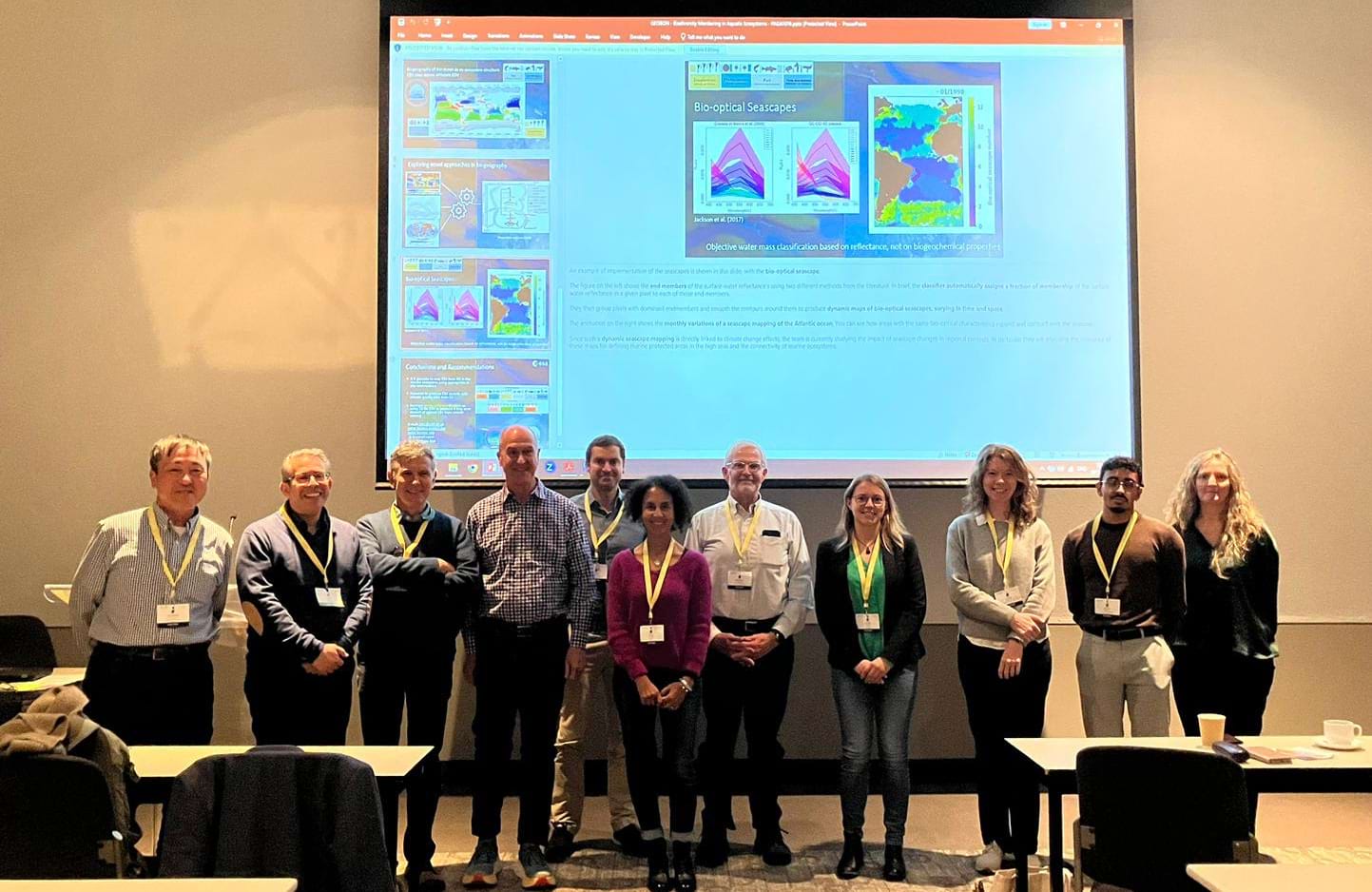
MBON and FWBON Joint Session at GEO BON Conference
MBON and FWBON held a joint session at the GEO BON Global Conference 2023 in Montreal, exploring how marine and freshwater biodiversity monitoring can be aligned with terrestrial approaches.
Read story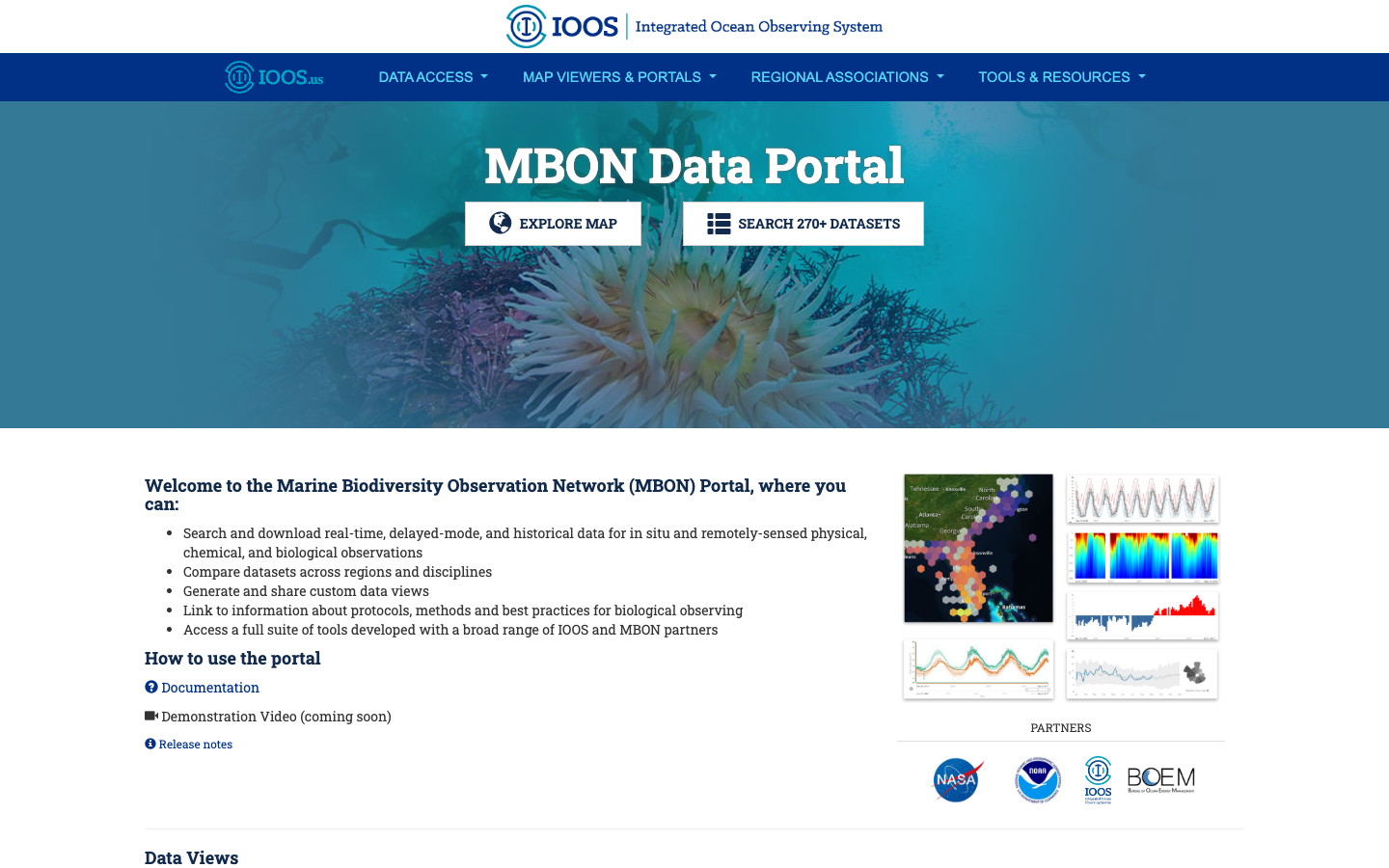
MBON Data Portal
Search, download, visualize, and analyze real-time, delayed-mode, and historical MBON biological observations alongside physical and chemical data.
Learn more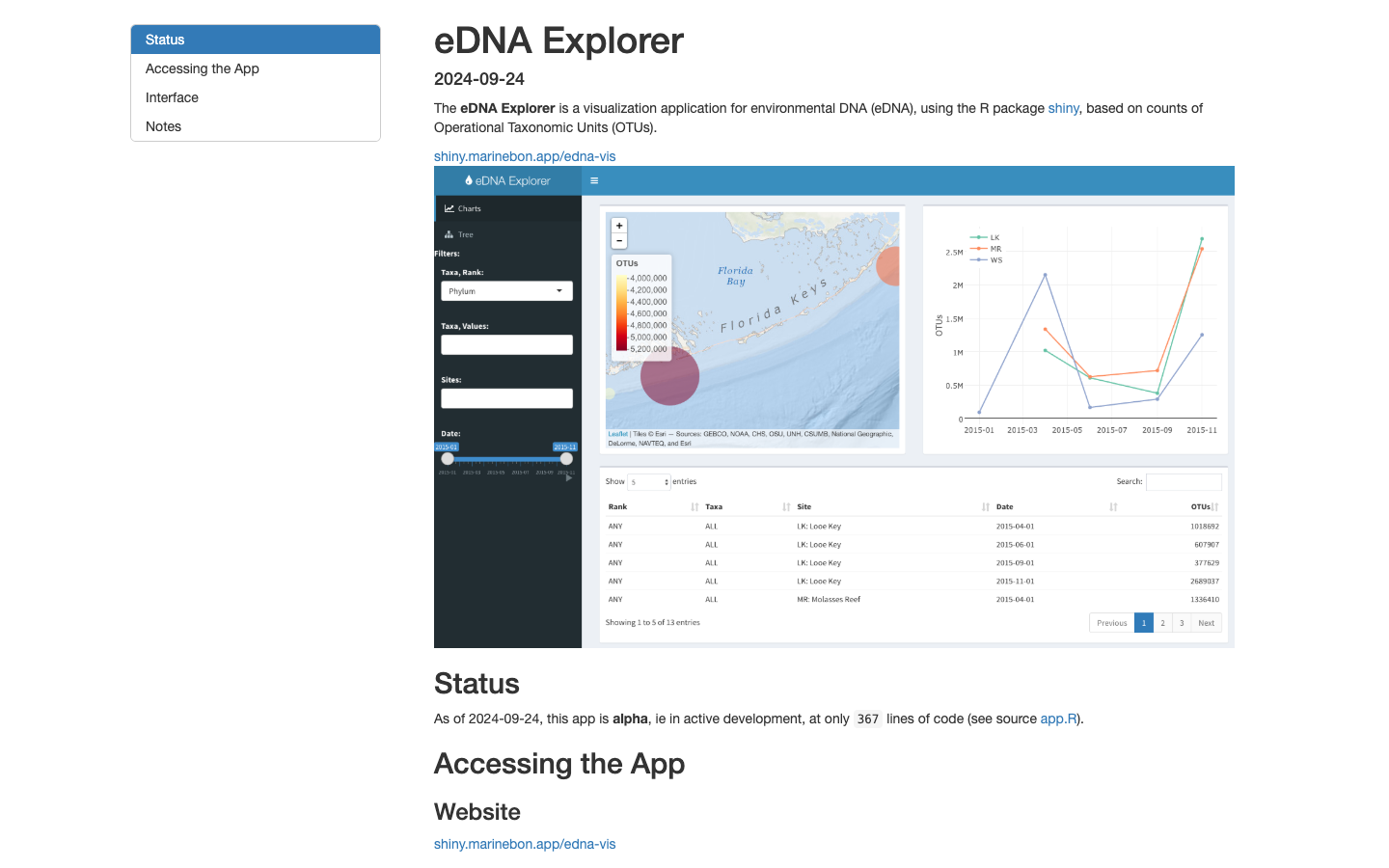
eDNA Visualization
Interactive visualization of environmental DNA (eDNA) detections across taxa and sites.
Learn more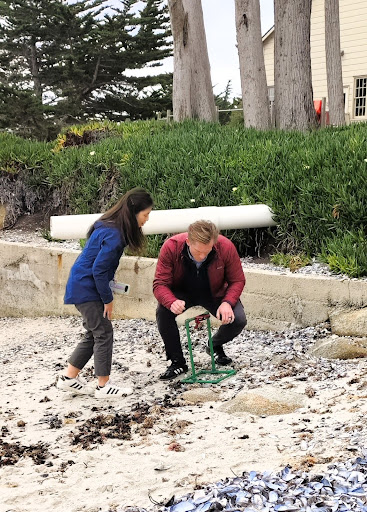
User Story: Bringing Steinbeck & Ricketts into the MBON Era
Over 85 years after Steinbeck and Ricketts documented life in the Sea of Cortez tidepools, a binational team retraces their expedition using MBON Pole-to-Pole protocols and eDNA to measure decades of biodiversity change.
Read story